Last updated November 21, 2026
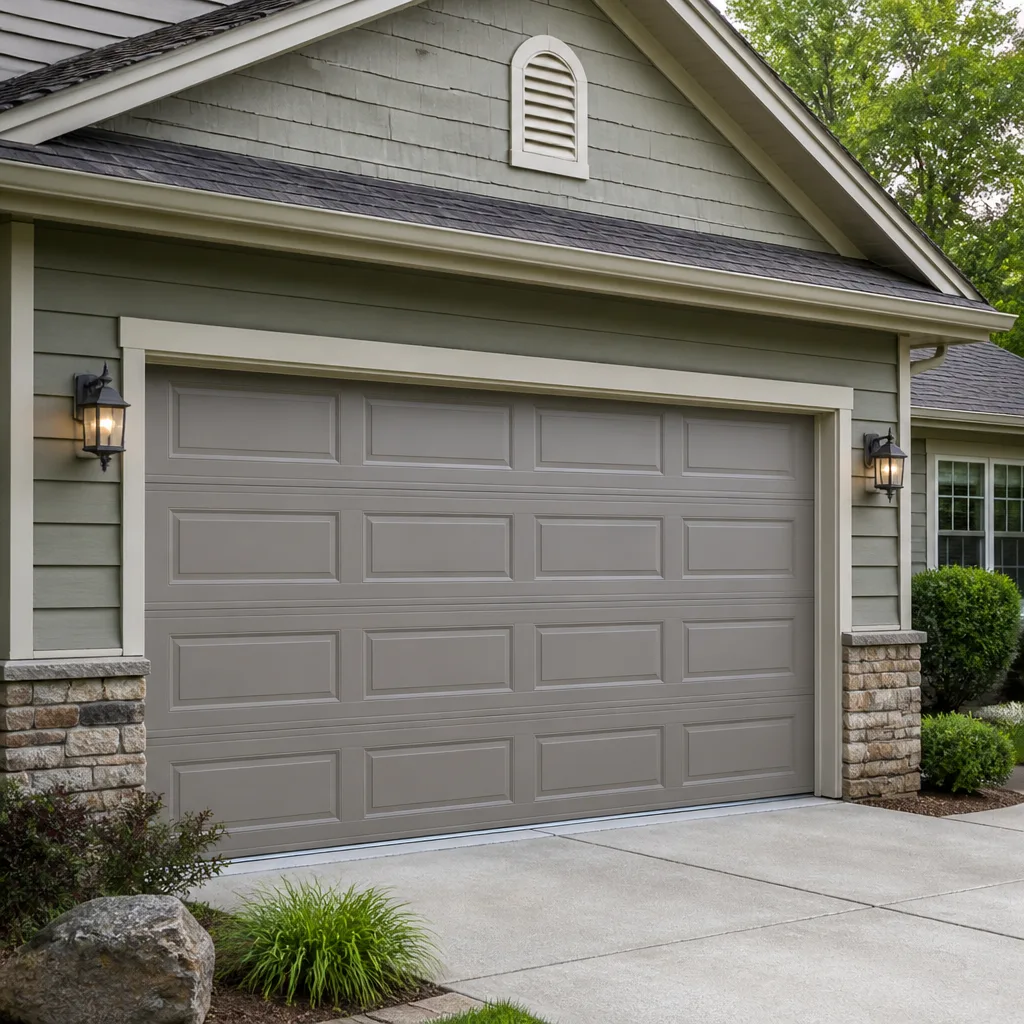 Raised-panel steel
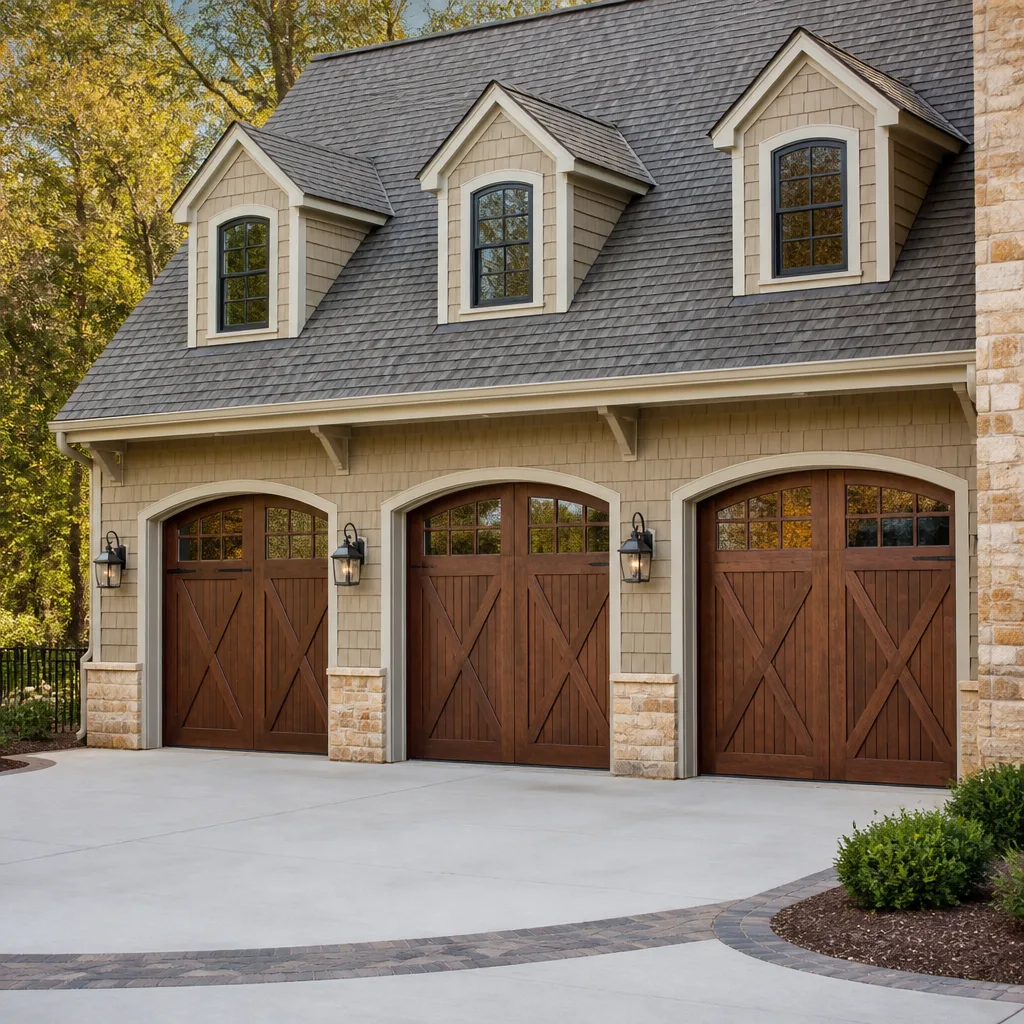 Carriage house
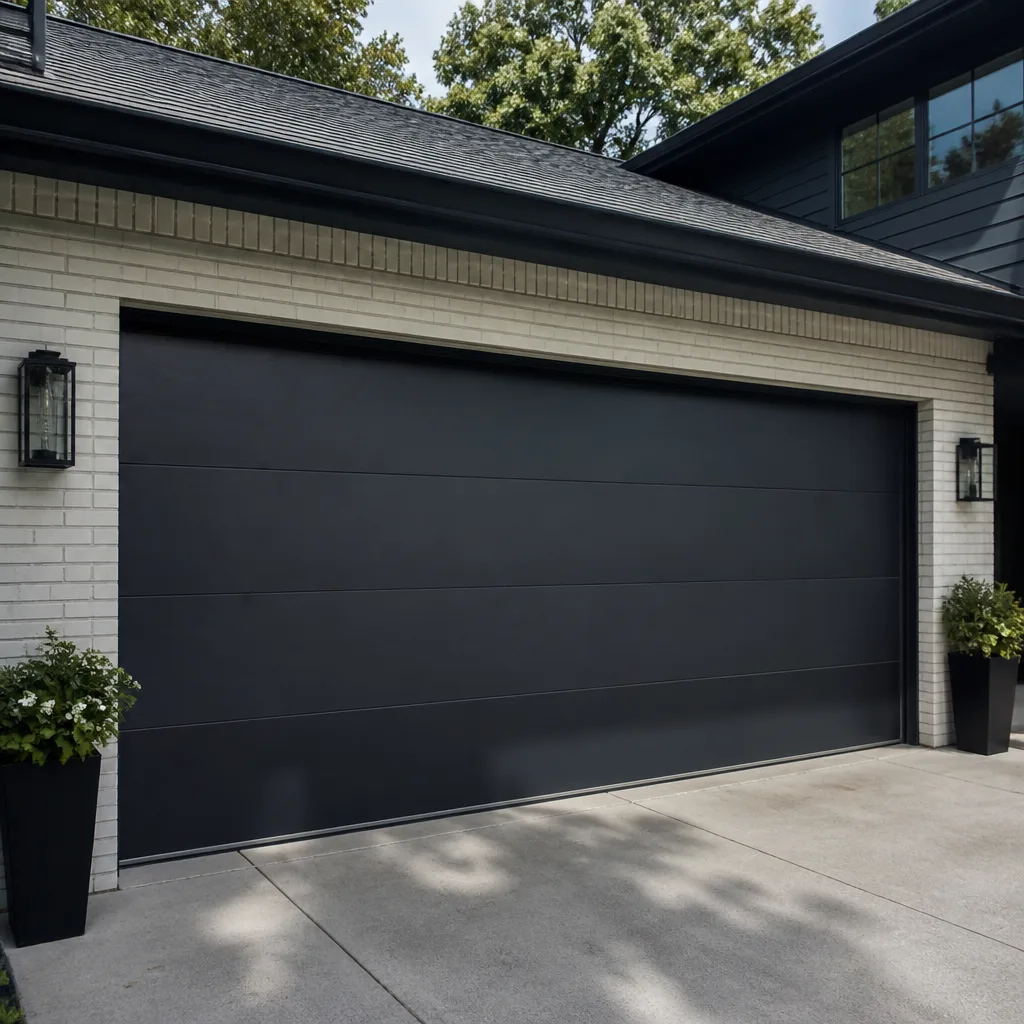 Modern flush
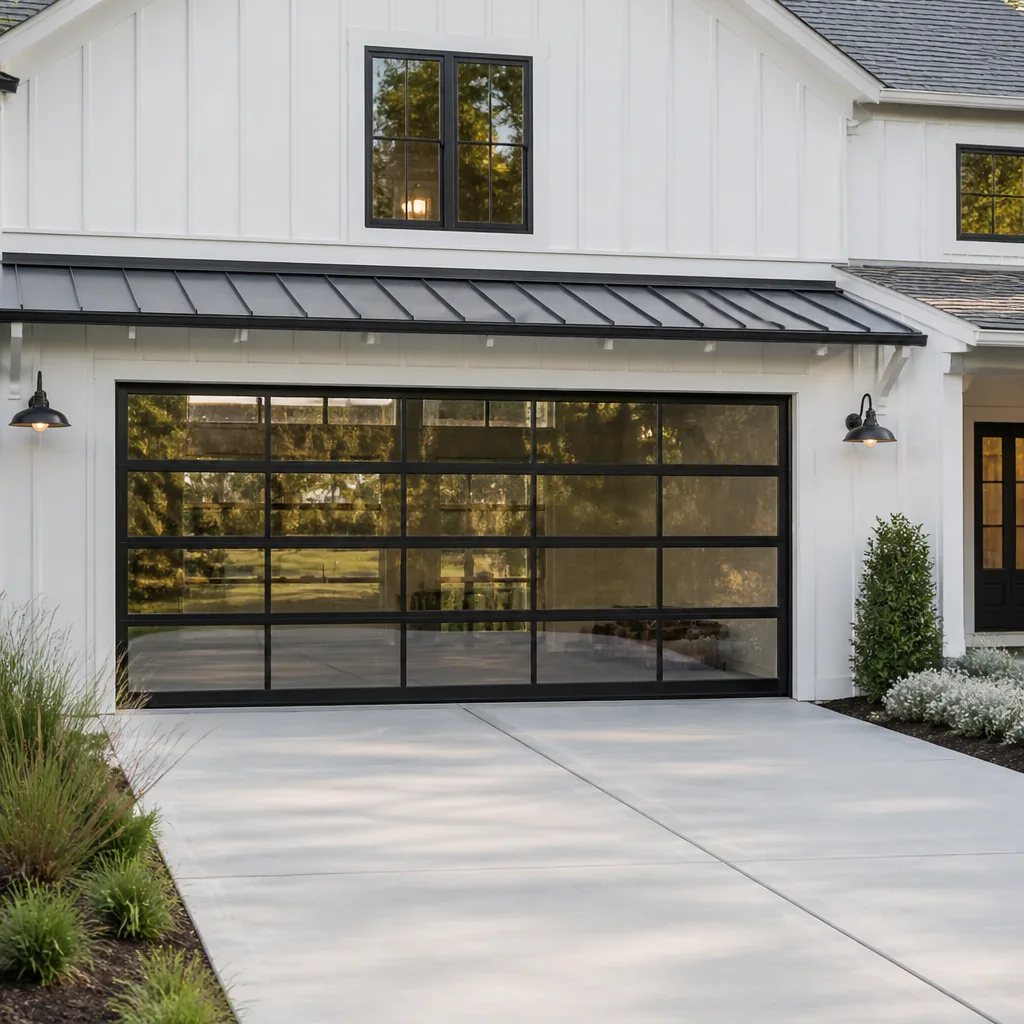 Full-view glass
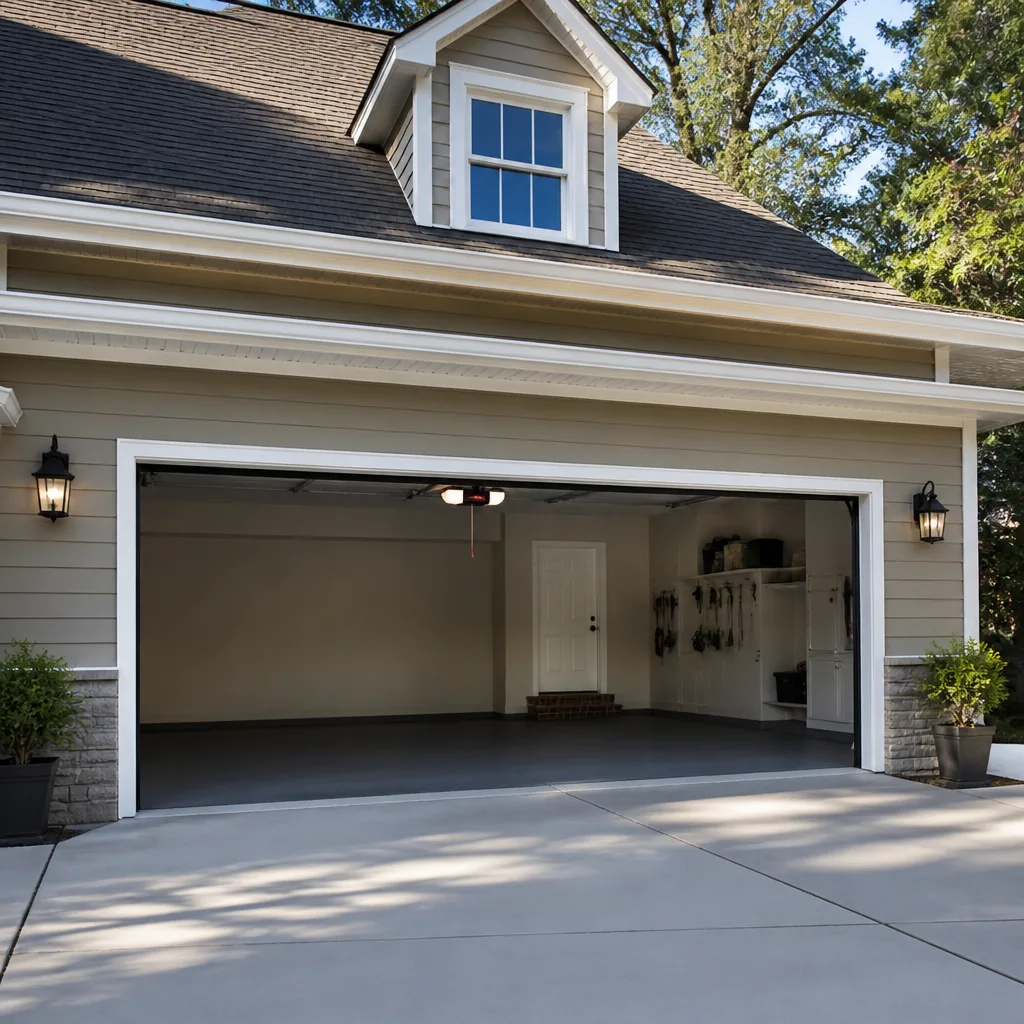 LiftMaster openers
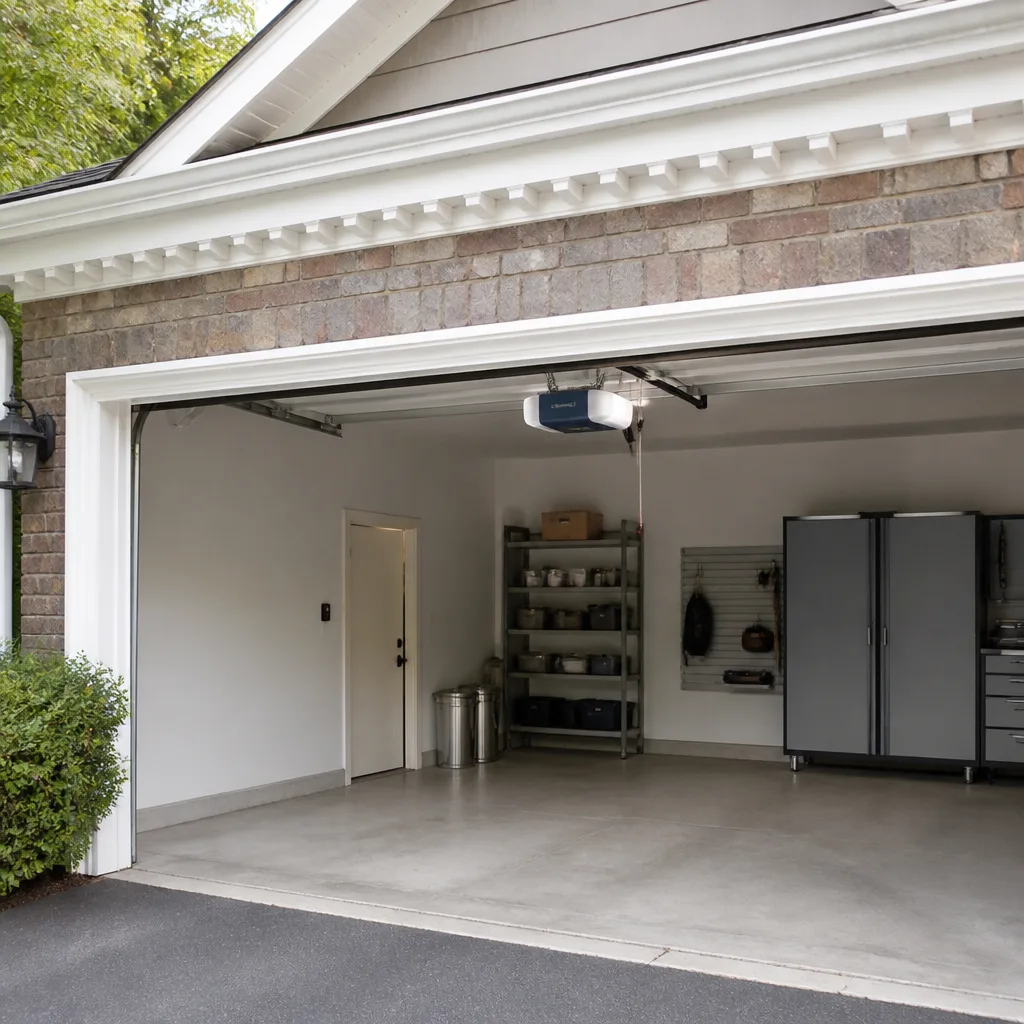 Chamberlain openers
Full 25-point door and opener safety check with every visit - springs, cables, rollers, tracks, and your LiftMaster or Chamberlain opener included
You get a price before we start. It does not change when the pro arrives.
Get your free estimateDIY vs Professional Garage Door: The Kingsbridge Homeowner’s Decision Guide
Most homeowners ask the wrong question. They ask “am I handy enough to fix this myself?” when the better question is “which specific task is this?” Those are very different things. Some garage door maintenance is genuine homeowner territory: lubricating rollers, tightening a loose hinge bracket, testing the safety reversal. Other tasks involve torsion springs that hold enough stored energy to cause serious injury if they release unexpectedly, and ER records document garage door spring injuries every year. The question isn’t whether you’re capable. It’s whether the risk-to-savings ratio makes sense for that particular job. This guide breaks the decision down task by task so Kingsbridge homeowners can tell the difference.
Quick Answer
Lubrication, cleaning, safety-reversal testing and tightening visible hardware are reasonable DIY jobs for most homeowners. Torsion spring replacement, cable work, track realignment and opener electrical repairs should go to a trained technician, because the risk of serious injury or of making the problem worse outweighs any savings. The deciding factor isn’t skill level; it’s which task you’re doing and what happens if it goes wrong.
Styles & brands we work with
- Raised-panel steel
- Carriage house
- Modern flush
- Full-view glass
- LiftMaster openers
- Chamberlain openers
Table of Contents
- The Task-by-Task Breakdown: What’s Safe DIY, What’s Risky, What’s Never DIY
- What “DIY Garage Door Repair” Actually Costs in Kingsbridge
- How NYC Building Code Affects DIY Legality
- The Hidden Cost of Voiding a Manufacturer Warranty
- A Three-Question Framework for Making the Call
- How Kingsbridge Weather and Housing Stock Affect the Decision
- Common Mistakes to Avoid
- When to Call a Professional
The Task-by-Task Breakdown: What’s Safe DIY, What’s Risky, What’s Never DIY
Garage door work splits into three tiers, and the tier matters more than your confidence level. The truth is that a homeowner who manages their own small repairs is a normal, sensible thing to be. What’s not sensible is treating a spring like a loose cabinet hinge.
Tier 1: Safe DIY
- Lubrication. Apply a garage-door-specific lubricant to rollers, hinges, and the torsion bar once or twice a year. This is the single best thing a homeowner can do to extend door life, and it’s genuinely easy.
- Safety-reversal testing. Place a 2×4 on the floor in the door’s path and lower the door. It should reverse on contact. Test the photo-eye by waving an object in front of it while closing. Both are quick, safe checks.
- Tightening visible bolts and hinge screws. Hand tools only. If a bolt is stripped or a hinge plate has torn from the door, that’s a repair, not maintenance.
- Visual inspection. Look at cables for fraying, springs for gaps, tracks for bends, and the door for sagging. You’re looking, not touching.
- Cleaning the photo-eye lenses and track. Dust and cobwebs trip more openers than faulty wiring does.
Tier 2: DIY With Risk
- Replacing bottom weather seal. Doable with the door fully up and secured, but a sloppy install lets water in and accelerates rot at the frame.
- Replacing rollers. Manageable for a patient homeowner, but the door must be fully open and clamped, and the wrong roller type wears the track prematurely.
- Adjusting opener travel limits and force settings. Small adjustments are fine; aggressive settings mask an underlying problem and stress the motor.
- Replacing a remote or reprogramming a keypad. Mostly a manual-reading exercise. Brand matters here: Genie, LiftMaster, Chamberlain each pair differently, and a mismatch wastes a trip to the store.
Tier 3: Never DIY
- Torsion and extension spring replacement. Torsion springs are under extreme tension. A winder slipping off can cause severe injury to hands, wrists and face. This is not a matter of caution; it’s a matter of stored energy that doesn’t care how careful you are.
- Cable replacement or adjustment. Cables are under enormous tension and fray invisibly. A snapped cable can whip with enough force to break bone.
- Track realignment. A bent track means the door is dropping out of plane, and the fix often reveals a deeper structural problem.
- Panel replacement on a bent door. Panels weigh more than they look, they pinch, and an incorrect shim can leave the whole door out of balance.
- Any electrical work inside the opener housing. High-voltage components, capacitors that hold a charge, and no way to test safely without a meter and training.
If you’re unsure which tier a repair belongs in, that’s a signal to get a professional diagnosis before touching anything. Our garage door repair team can identify the tier in a few minutes, often for free.
What “DIY Garage Door Repair” Actually Costs in Kingsbridge
DIY looks cheap when you only count the part. It gets expensive when you add the tools, the retail markup, the second attempt, and the callback. Here’s what a realistic 12-month DIY ledger looks like for a typical Kingsbridge homeowner.
- Retail parts markup. A torsion spring that a trade supplier sells to a technician often costs 25-40% more at retail, and the spring has to be matched to the door’s weight and cycle rating. Buying the wrong one isn’t a learning moment; it’s a safety hazard.
- Winding bars and safety gear. A proper pair of winding bars is not the same as homeowner-grade tools. If you’re doing spring work yourself, you’re already outside the safe range. Don’t cheap out on the one tool that stands between you and the hospital.
- Opener parts. Logic boards, gears, and safety sensors are usually not returnable once installed. A Genie board swapped in and out twice costs more than a proper repair.
- The first-attempt callback rate. A large share of homeowner repairs that “sort of work” end up needing a second visit – either by the homeowner or eventually by a technician who has to undo the mess first. In our experience the second attempt is where the math collapses.
- Your own hours. A weekend afternoon is not free if it turns into a week of a door that won’t close securely.
Where most DIY projects pay off is in the maintenance tier: a tube of lubricant and a weather seal from the hardware store keep a door running for years. It’s the repair tier, especially springs and cables, where the ledger flips.
A rough sense of what professional work typically costs
These are typical Kingsbridge-area estimates, not exact quotes. Final pricing depends on door type, brand, and access.
- Torsion spring replacement (one spring): $220-$380 typical. A matched pair is usually replaced together, so a pair is roughly twice that.
- Extension spring replacement (per spring): $180-$320 typical.
- Opener repair: $150-$340 typical, depending on brand and part availability.
- Cable replacement (per side): $140-$260 typical.
- Roller replacement (set): $140-$260 typical.
- Track realignment: $130-$260 typical.
- Full door replacement: $950-$2,400 typical for a single-car door, more for oversized or insulated doors.
Whatever a technician finds, we quote the price before the work starts, and the written estimate is the price. If the job changes once we’re in it, you hear about it before anything happens, not after.
How NYC Building Code Affects DIY Legality
This is the part most DIY guides skip. In New York City, a garage door is a building component governed by the city’s building code and requires a permit for structural changes – new installation, panel replacement, track replacement, and any modification to the header or frame. Cosmetic and maintenance work generally does not require a permit. Spring, cable, and roller replacement are typically maintenance work, though it’s always worth confirming with the city’s building department, since a given job can trigger a permit requirement depending on what’s actually being changed.
Where the line gets clearer is the licensed-contractor requirement. Electrical work tied to the opener – adding an outlet, hardwiring an opener circuit, running a new conductor – requires a licensed electrician under NYC rules. A homeowner cannot legally do it even if they’re comfortable with a wire nut. Similarly, any structural modification to the garage opening itself falls under contractor licensing requirements.
What this means for a Kingsbridge homeowner
- Maintenance (lubrication, weather seal, testing): no permit, do it yourself.
- Like-for-like part swap (spring, cable, roller): typically no permit, but the work is still a professional-tier safety risk.
- New door installation or panel replacement: typically requires a permit, and the work needs a licensed contractor. This is where our garage door installation team handles the paperwork and inspection side.
- Opener electrical modifications: licensed electrician required. Non-negotiable.
Most of the Kingsbridge housing stock is older – brick, tight clearances, narrow driveways, and garages retrofitted rather than purpose-built. A door that fits a newer suburban garage rarely fits here without custom ordering, and that’s the main reason installation in Kingsbridge isn’t a DIY project even for a very capable homeowner. Garage Door Repair Kingsbridge can walk you through what’s permitted before you commit.
The Hidden Cost of Voiding a Manufacturer Warranty
Every garage door and opener sold today carries some manufacturer warranty – typically a limited one covering panels, hardware, and springs separately, with different terms for each. The warranty almost always requires professional installation and service to remain valid for the covered components. A homeowner who replaces a spring, adjusts force settings aggressively, or swaps a logic board is gambling that the warranty wasn’t going to matter. It usually matters the moment something else fails.
This is where brand matters. A door from Clopay or Amarr has a specific warranty structure and part numbering; a Wayne Dalton or Genie opener has its own. If you DIY with a third-party part, the manufacturer can reasonably deny a later claim on the affected component – not because you broke the door, but because the part wasn’t theirs and the installation wasn’t logged.
- Panels and finish: often covered against cracking and manufacturer defect only under professional install.
- Springs: often covered by cycle count. Replacing a spring yourself with an unmatched part is the fastest way to void that coverage.
- Openers: voids quickly if the opener was modified or paired with non-OEM parts.
- Hardware and rollers: usually a straightforward, shorter warranty that’s easy to preserve with maintenance.
Check the paper warranty packet that came with your door or opener before you touch anything. If it’s gone, the manufacturer can usually tell you the terms by model number. On a door that’s still under a meaningful warranty, the safer math is almost always to let a technician do the repair – and to keep the receipt.
A Three-Question Framework for Making the Call
Two homeowners with the same repair can reasonably make opposite decisions because the right answer depends on the task, the door, and what’s at stake. If you can honestly answer yes to all three questions below, DIY is a reasonable call. If you can’t, the math favors calling a specialist. No shame in either outcome.
Question 1: Is the door currently safe, and is the repair purely cosmetic or maintenance?
If the door is fully functional, in balance, and the repair is maintenance-tier – lubricant, weather seal, photo-eye cleaning, remote reprogram – yes, you’re in safe DIY territory. If the door won’t close fully, sags, or makes a new noise, stop: something structural is happening and the safe answer is no.
Question 2: Does the task involve anything under tension, high voltage, or a component that outweighs you?
If the answer is no (Tier 1 and much of Tier 2), continue. If the answer is yes – springs, cables, tracks, opener housings, panels – the answer to question 2 is “no, it doesn’t touch that,” or you stop. Tension and voltage don’t reward confidence.
Question 3: Can you afford to be wrong?
Be honest. If a first attempt goes sideways and you need a technician to come out anyway, have you saved anything? In most cases, no. If you’re doing spring or cable work and something goes wrong, the cost is a trip to the ER, not a service call. If you can’t afford the worst-case outcome, the answer is to pay for the professional tier.
If you answered “yes” to all three, go ahead. If any answer is “no,” that’s your sign. Our garage door opener repair team can diagnose the problem quickly so you know exactly which task you’re facing before you decide.
How Kingsbridge Weather and Housing Stock Affect the Decision
Kingsbridge in the Bronx has a climate that is hard on garage doors in a specific, predictable way. Cold winters and hot, humid summers expand and contract the door’s steel panels and the spring metal repeatedly each year. That cycling is one of the main reasons torsion springs fail – not abuse, just physics. The same seasonal swing that cracks sidewalk pavers works a spring to failure over time, and a homeowner reading a tutorial rarely accounts for a door that’s already cycled through several winters.
The housing stock pushes it further. This part of the Bronx is predominantly mid-century brick with narrow driveways and garages that were often retrofitted. That means:
- Tight clearances. Springs and openers are mounted in cramped spaces, and a wrong swing during a DIY repair is more likely to hit something.
- Aged framing. A door that looks straight may have a header that isn’t, and a track realignment on an out-of-square opening is not a homeowner job.
- Older opener units. Many homes in Kingsbridge still run a legacy Craftsman or Genie unit, and parts for those are increasingly unavailable at big-box stores even when they exist online.
Our technicians have up to 13 years of experience working on the brand mix common to this borough – Clopay and Amarr doors, LiftMaster and Chamberlain openers, and a lot of Wayne Dalton systems that were installed in the 1990s and 2000s. When a homeowner in Kingsbridge calls with a spring failure, we can usually tell from the phone what size spring and what brand of door we’re looking at, which saves a trip and lets us quote accurately.
Common Mistakes to Avoid
- Assuming a spring is a spring. Torsion springs are matched to door weight and cycle rating. Buying the wrong one at the hardware store on a Saturday and installing it is not just a waste – it can break your door and injure you. If the door’s model number isn’t on a sticker, that’s your signal to call.
- Testing a door that’s clearly out of balance. A door that lifts by hand with almost no resistance, or won’t stay up halfway, has a spring problem. Don’t run the opener on it. Stop and get a diagnosis.
- Treating the photo-eye as a nuisance. Homeowners sometimes tape, unplug, or defeat a safety sensor because it’s tripping. That’s a safety system, and disabling it is how doors close on cars, pets, and people.
- Using the wrong lubricant. WD-40 and generic spray oils attract grit. Use garage-door-specific lubricant on rollers and hinges. This is the one lubricant mistake that costs a door its life.
- Ignoring permit requirements on a panel swap. A permit is required for many installation and replacement jobs in NYC. A DIY panel swap that triggers an inspection problem is a bigger headache than the job was going to be anyway.
- Adjusting the force setting to “make it close.” Increasing the opener’s force setting to overcome a binding door masks the problem and burns out the opener motor. Fix the binding, don’t overpower it.
- Assuming the door will self-correct. A door that goes out of balance rarely comes back into balance on its own. Early intervention is cheaper than a full door replacement.
When to Call a Professional
Call a professional the moment any of these apply: a broken spring (you’ll hear a loud bang, and the door suddenly feels weightless), a snapped cable (you’ll see a wire hanging loose), a door that won’t close fully or reverses without an obstruction, an opener motor that hums but doesn’t move the door, a door that keeps coming off its track, or any electrical concern in the opener housing. If the door is stuck open, that’s a security issue and also a safety issue – our emergency service tier exists for exactly this situation. Same-day appointments are available when a door failure can’t wait for a standard booking. Garage Door Repair Kingsbridge offers free estimates in Kingsbridge – call (866) 993-8871.
If the door is still functional but the repair is in the never-DIY tier (springs, cables, tracks), call before you touch anything. The price of the repair is small compared to the cost of a first attempt that goes wrong.
See the difference
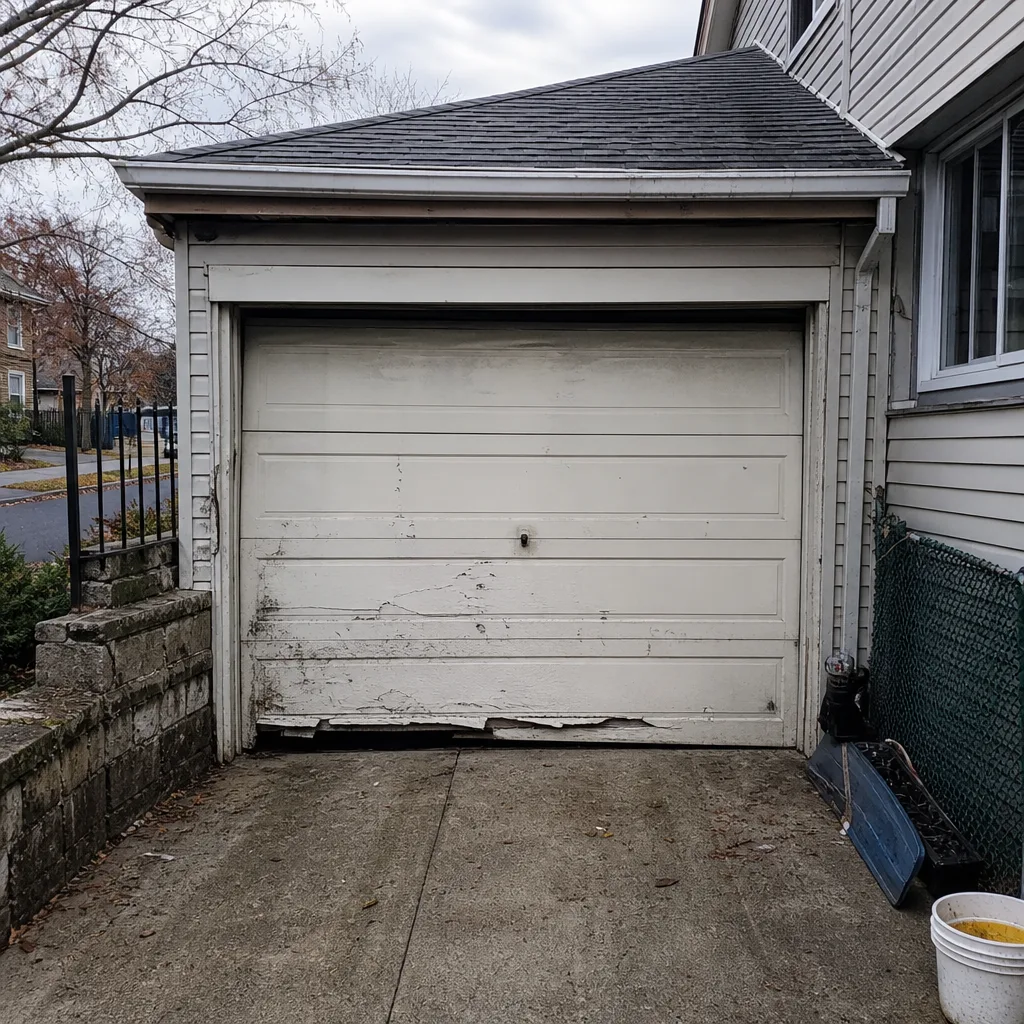 Before
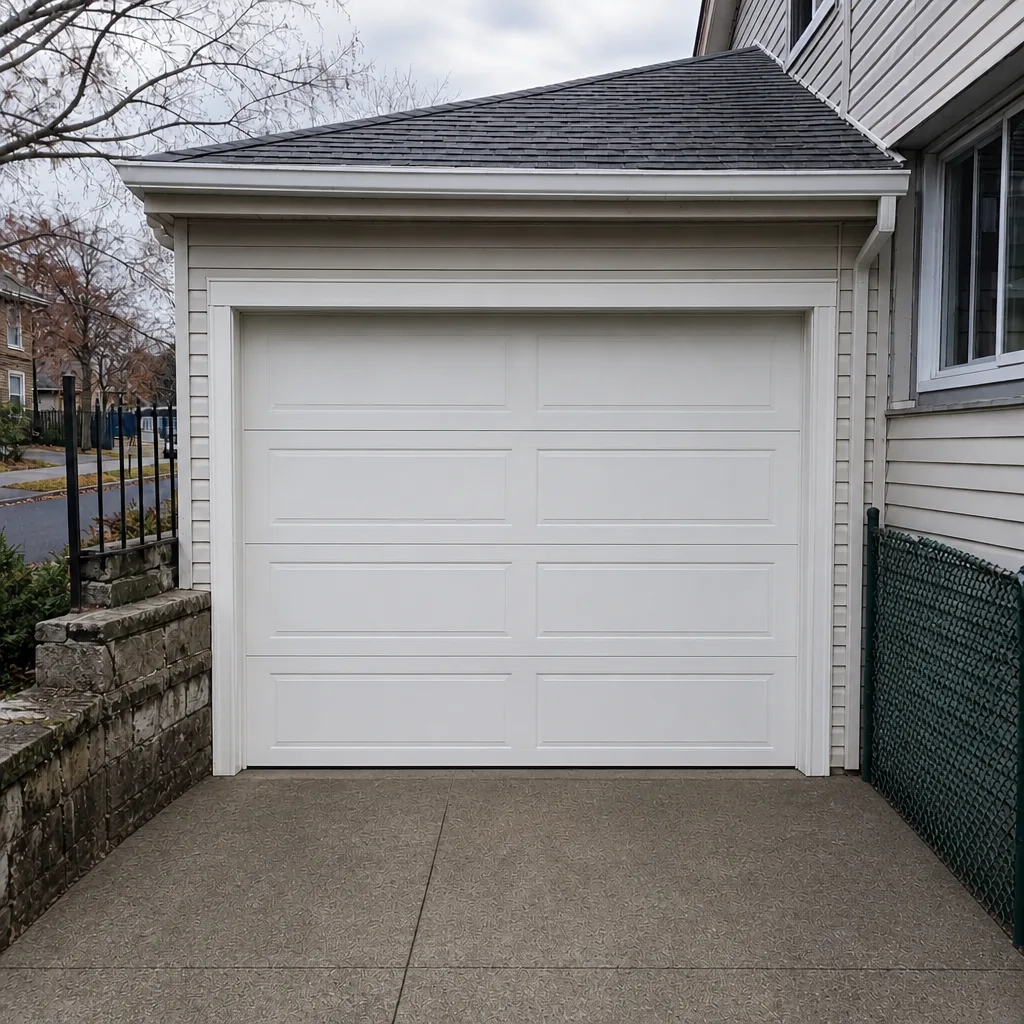 After
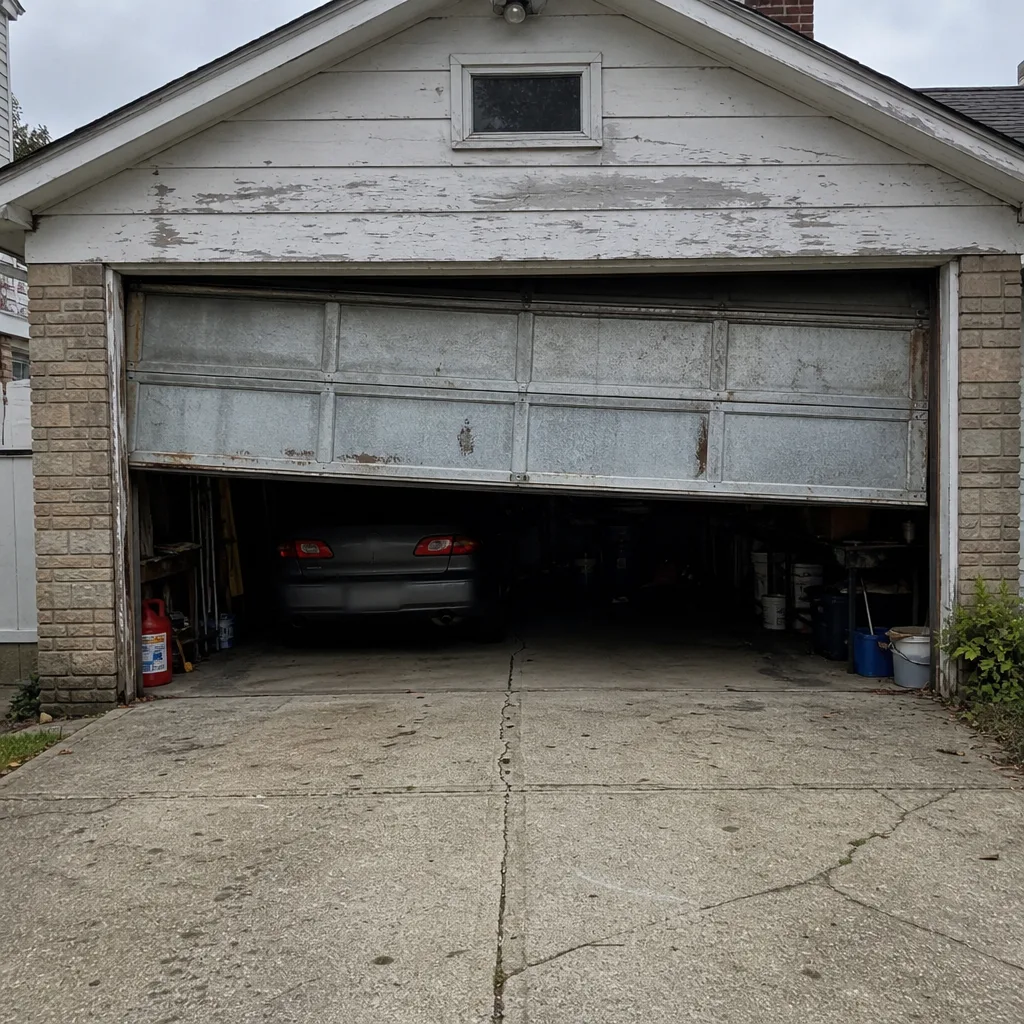 Before
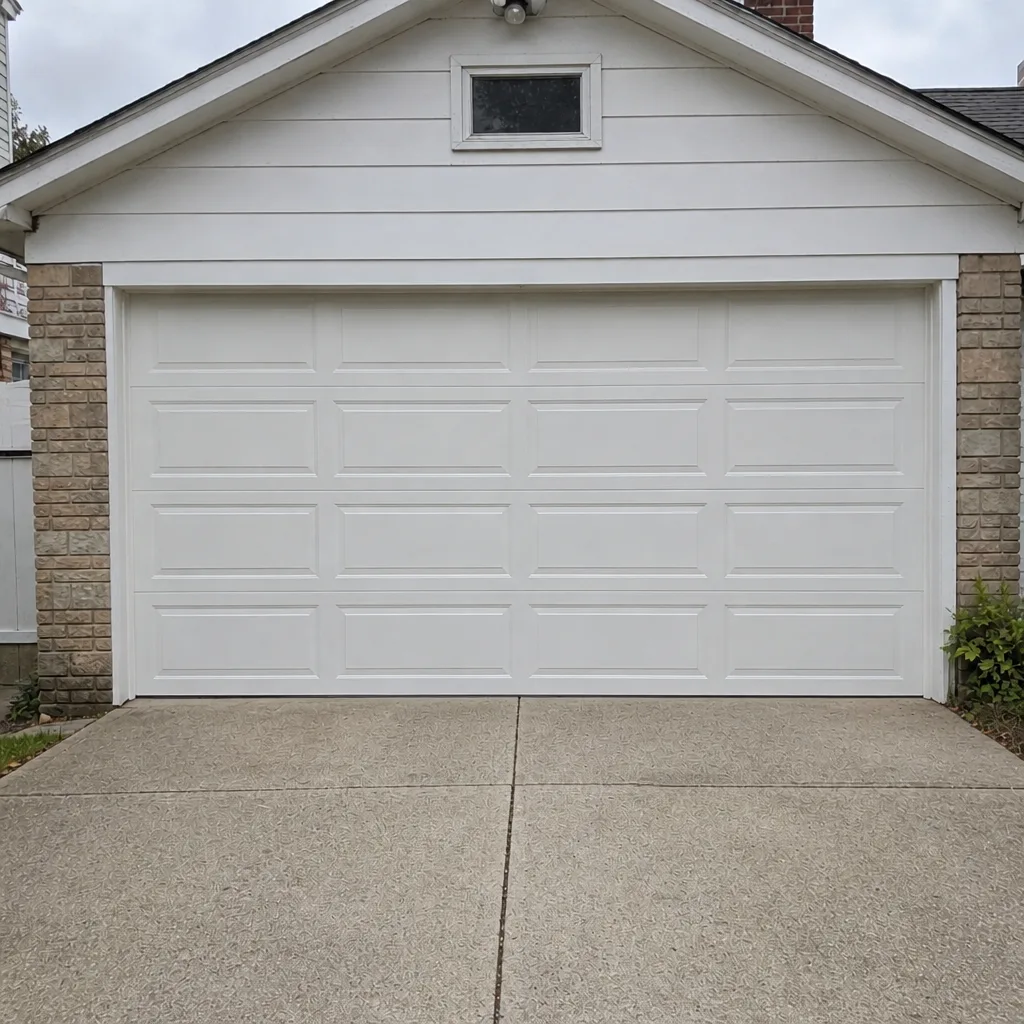 After
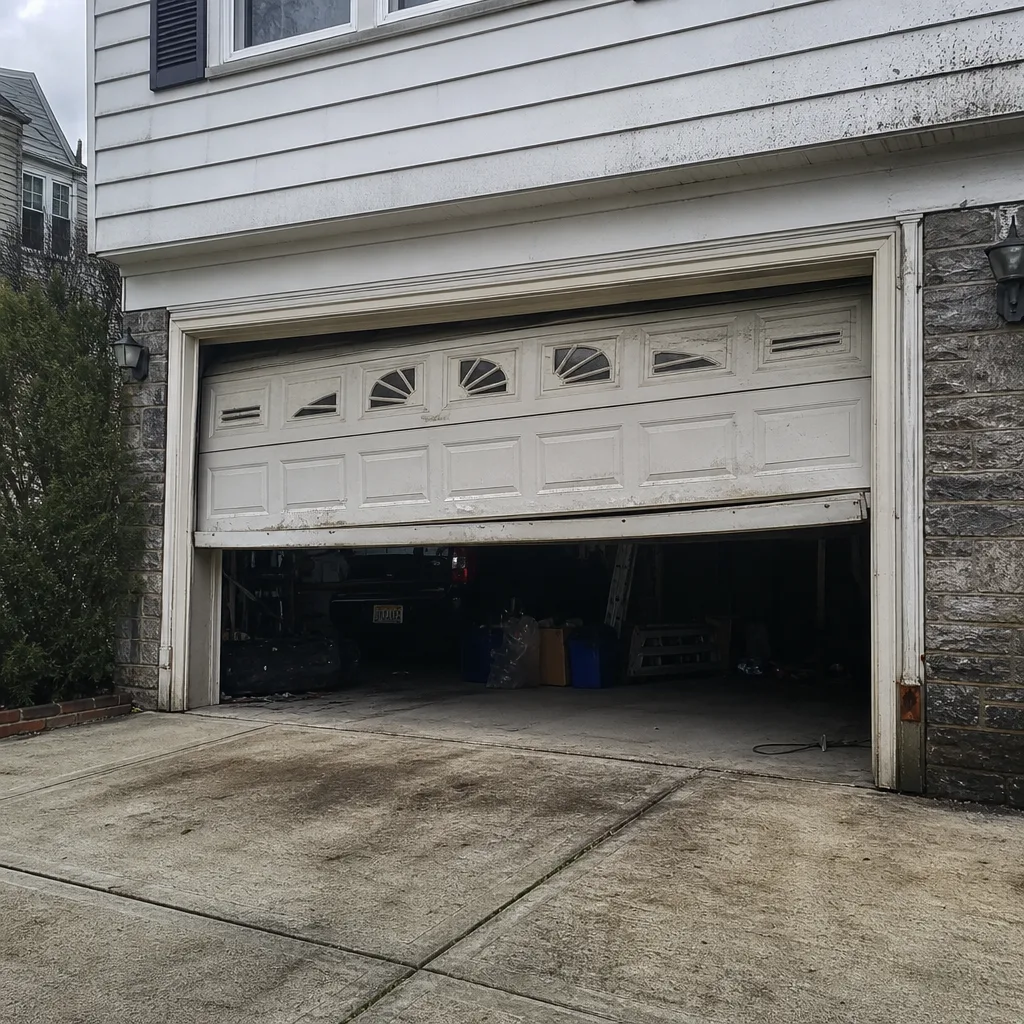 Before
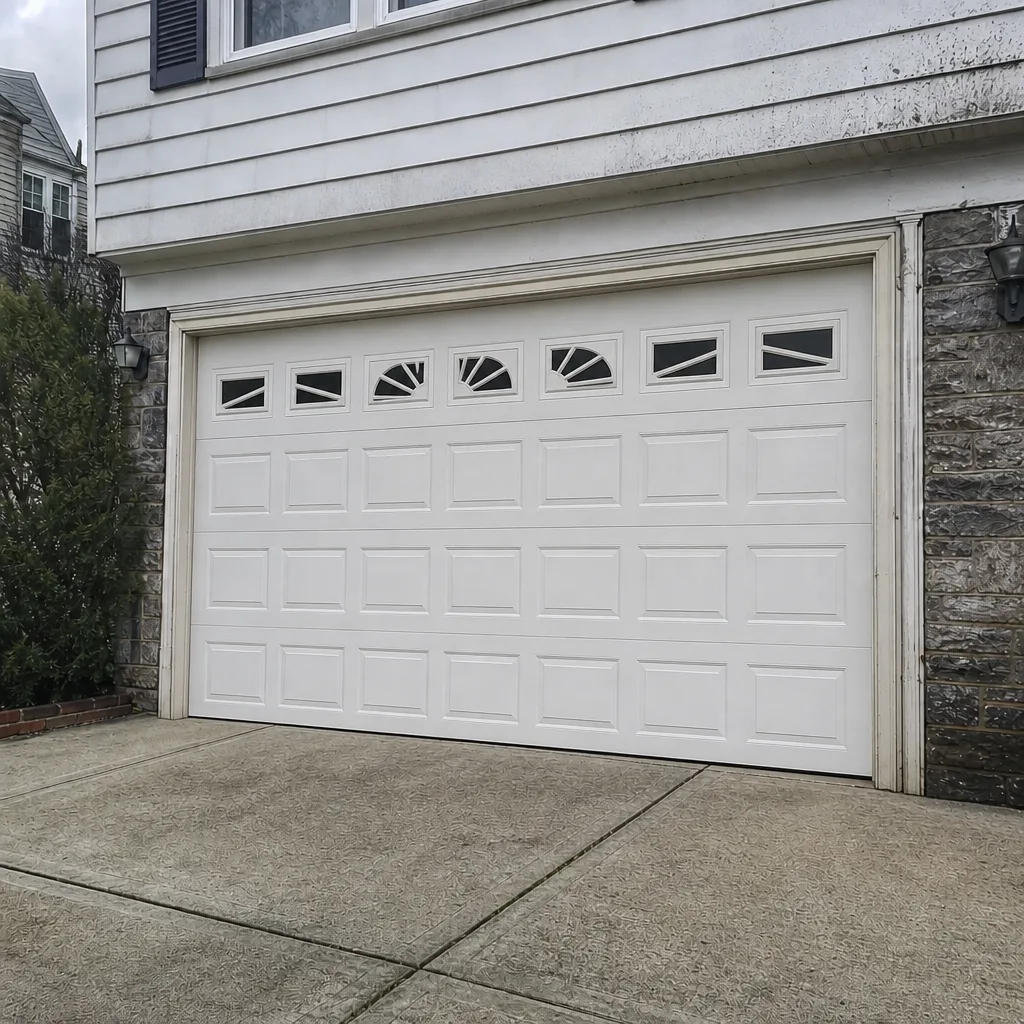 After
Frequently Asked Questions
It’s worth it for maintenance-tier work – lubrication, weather seal, safety testing, and reprogramming a remote – and generally not worth it for any repair involving springs, cables, tracks, or the opener’s electrical components. The savings from DIY repair work are usually eaten by retail part markup, the cost of a second attempt, and the risk of injury or a voided warranty. Call (866) 993-8871 for a free estimate if you’re unsure which tier your job is in.
Legally, many spring repairs don’t require a permit, so a homeowner can usually do it. But the code isn’t the constraint here – physics is. A torsion spring stores enormous energy and a release can cause severe injury regardless of permits. We recommend a trained technician for any spring work, and our team handles spring repairs as a dedicated service. Call for a free estimate before you take it on yourself.
Often, yes. Most manufacturer warranties require professional installation and service for the covered components, and using non-OEM parts is a common reason a claim gets denied. If your door or opener is still under warranty, check the enclosed paperwork or look up your model number before you do anything. A technician visit that keeps the warranty intact is usually cheaper than a voided claim. Call (866) 993-8871 to talk through what’s covered.
A single torsion spring typically costs $220-$380 to replace in Kingsbridge. A matched pair, which is usually replaced together, runs roughly twice that. The written estimate you get before work starts is the price – no surprises. Call (866) 993-8871 for an exact quote; estimates are free.
Lubricate rollers and hinges with garage-door-specific lubricant, clean the photo-eye lenses, test the safety reversal with a 2×4 on the floor, tighten visible bolts and hinge screws with hand tools, replace the bottom weather seal, and reprogram a remote. All safe, all useful. Anything involving a spring, a cable, the track, a panel, or the opener’s internal wiring is technician work.
Yes – a door that won’t close is a security concern, and our emergency service is set up for exactly that. Call (866) 993-8871 and we’ll get a technician out as quickly as we can, same day when possible. Estimates are free, and we quote before anything happens. Same-day is for repairs; new door installations are measured, ordered, and scheduled.
The Bottom Line
The DIY-vs-pro decision on a garage door comes down to which task, not how handy you are. Lubricate, test, tighten, and inspect yourself – those are genuinely homeowner jobs. Anything involving springs, cables, tracks, panels, or the opener’s electrical side belongs to a trained technician, because the risk of injury and the cost of a first attempt that fails both outweigh the savings. In Kingsbridge, older housing stock and tight clearances push the line even further toward professional. When you’re not sure which tier your repair is in, ask.
Ready to know exactly what you’re facing? Call Garage Door Repair Kingsbridge at (866) 993-8871 for a free estimate. We work on the door you already have, we quote before we start, and we tell you honestly whether repair or replacement makes more sense for your home. From a quick fix to a full new door, the technician who diagnoses your problem is the same company that can fix it – no referral handoff, no surprises on the invoice.
Written by the team at Garage Door Repair Kingsbridge.