Last updated November 21, 2026
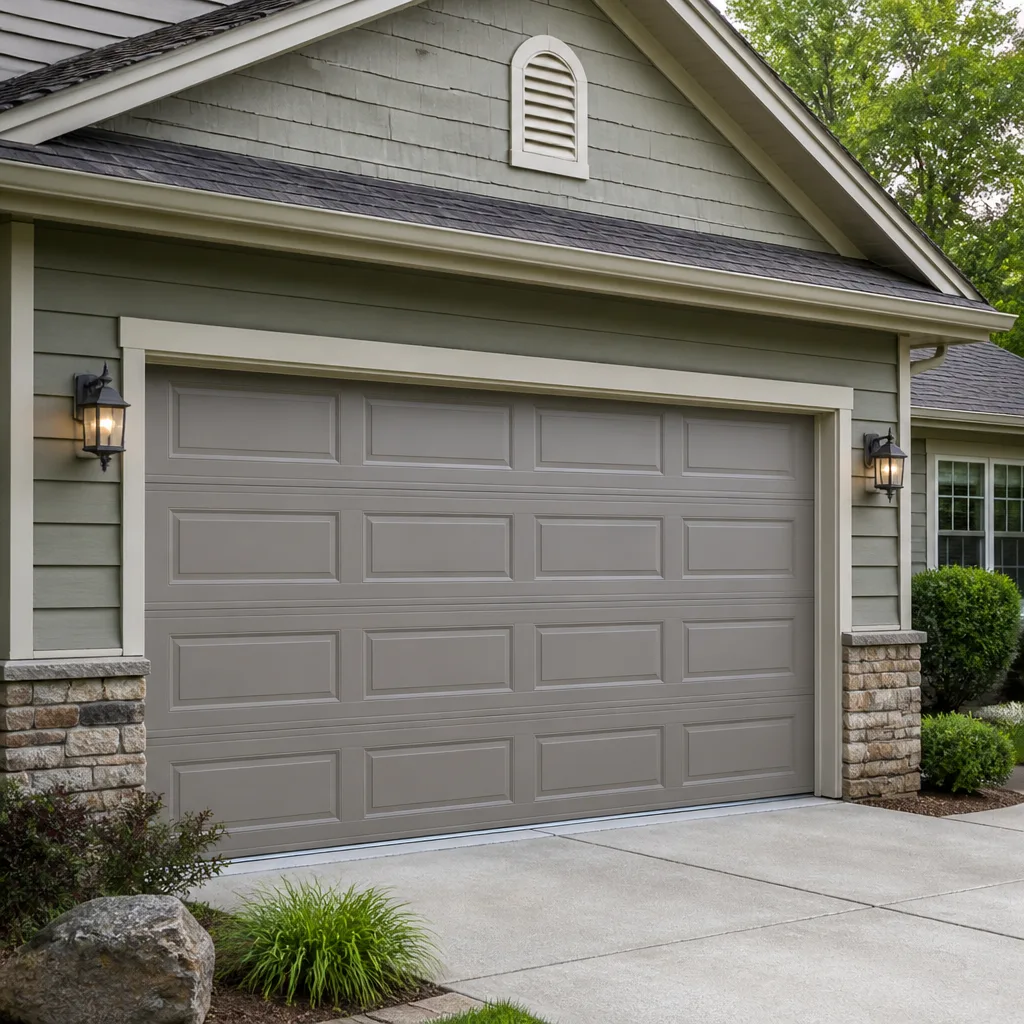 Raised-panel steel
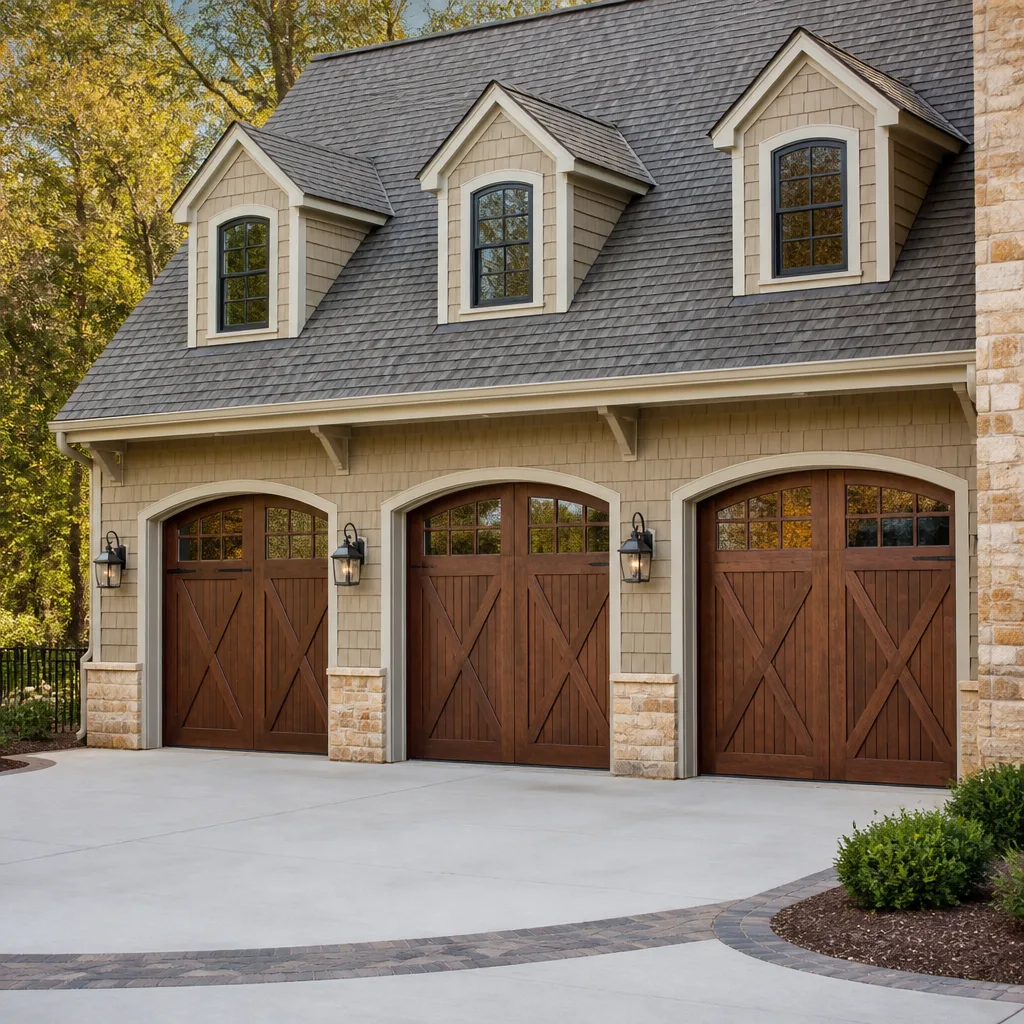 Carriage house
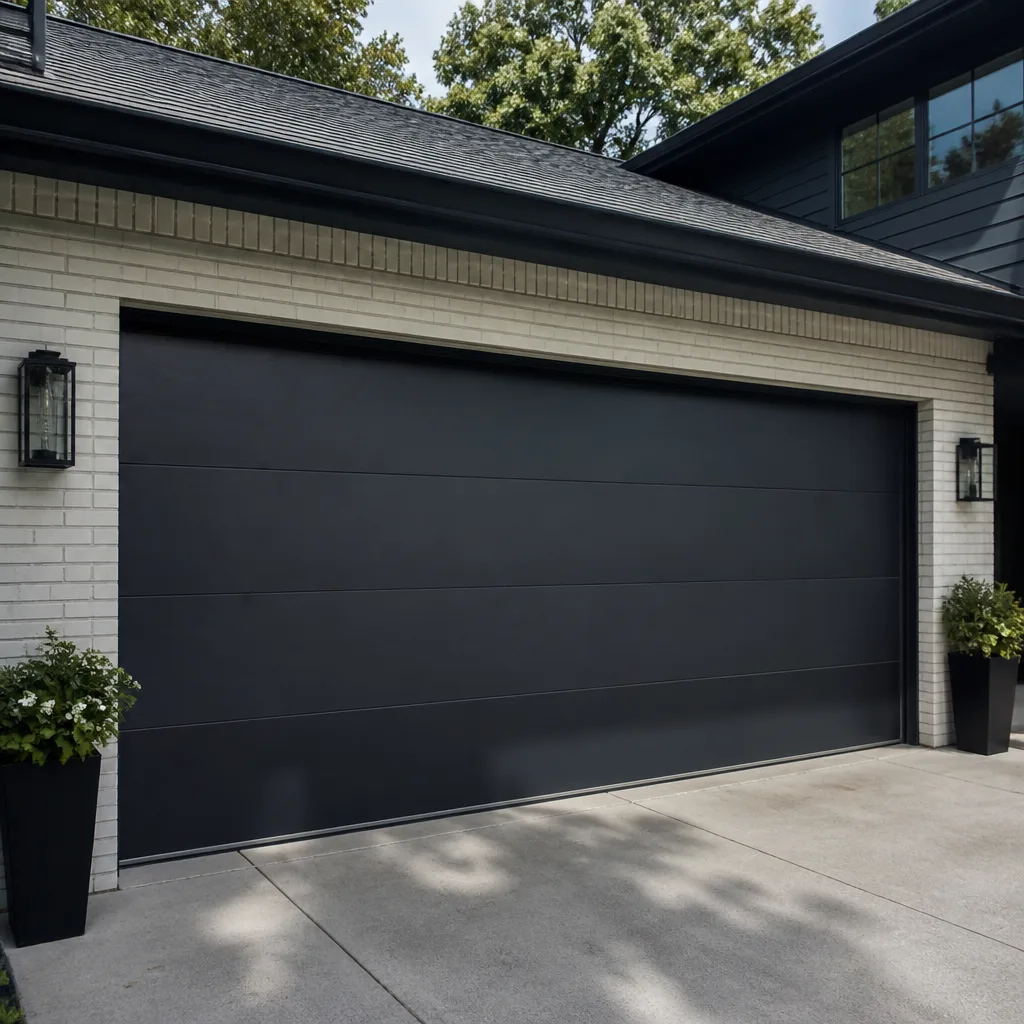 Modern flush
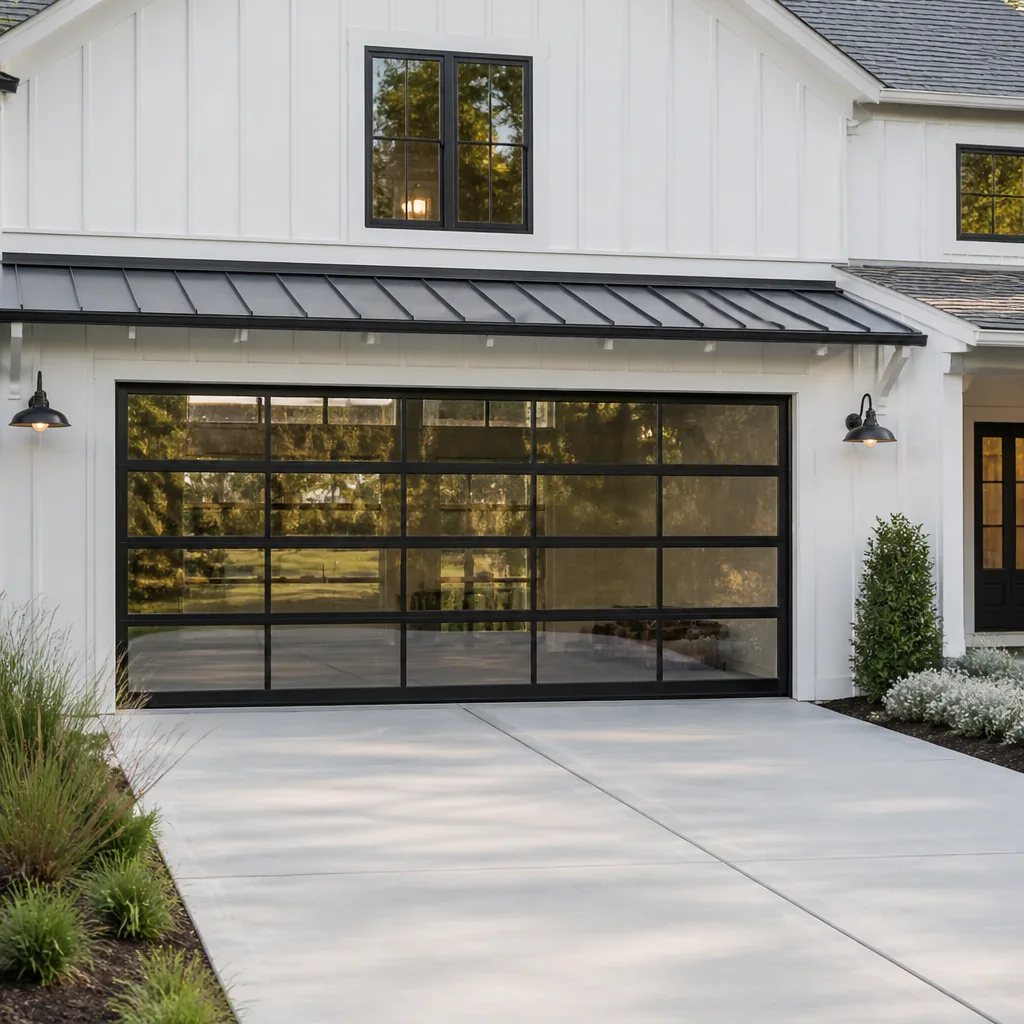 Full-view glass
 LiftMaster openers
 Chamberlain openers
Full 25-point door and opener safety check with every visit - springs, cables, rollers, tracks, and your LiftMaster or Chamberlain opener included
You get a price before we start. It does not change when the pro arrives.
Get your free estimateGarage Door Repair Maintenance Checklist for Kingsbridge Homeowners
Most maintenance checklists tell you to lubricate the springs and call it a day. They don’t explain what happens when you skip it through a Bronx winter that drops well below freezing and a summer that bakes the same metal in the same year. Cold-weather metal fatigue is the item every generic checklist skips, and it’s the one that matters most for doors in Kingsbridge. A torsion spring that fails in January doesn’t just inconvenience you. It traps your car behind a door that won’t lift when the temperature is already dangerous.
This checklist is built around the failure points our technicians actually find on doors around Kingsbridge, from the apartment blocks along Broadway to the two- and three-family houses on the side streets. You’ll get a lubrication schedule tied to our real seasonal swings, a way to test your opener’s safety features without special tools, a clear line between what you can safely handle and what you can’t, and a month-by-month log so the checklist becomes a maintenance record rather than something you read once and forget.
Quick Answer
A garage door maintenance checklist for Kingsbridge homeowners should cover six components that wear first in a cold-climate urban setting: the springs, the cables, the rollers, the hinges, the track, and the opener’s safety settings. Check them monthly by eye and by ear, lubricate the moving metal parts as the seasons change rather than on a fixed twice-a-year rule, and test the auto-reverse feature every month. Anything involving springs, cables, or the counterbalance system belongs to a trained technician, not a homeowner.
Styles & brands we work with
- Raised-panel steel
- Carriage house
- Modern flush
- Full-view glass
- LiftMaster openers
- Chamberlain openers
Table of Contents
- The Six Components That Wear First in Kingsbridge
- A Lubrication Schedule Built Around Kingsbridge Seasons
- How to Test Auto-Reverse and Force Settings Yourself
- What You Can Safely Do vs. What Needs a Technician
- A Printable Month-by-Month Maintenance Log
- Getting the Door Ready for a Bronx Winter
- Opener Care for LiftMaster, Chamberlain, and Genie Systems
- Repair or Replace? A Practical Decision Guide
The Six Components That Wear First in Kingsbridge
On a door in Kingsbridge, the same six parts tend to show wear before anything else. Urban cold-climate conditions speed up the process: temperature swings between seasons, road grit that works its way into moving parts, and doors that cycle heavily because they’re the main entry point for the house. Here’s what to look at and what early failure looks like.
- Torsion and extension springs. Look for a visible gap in the coil, a stretched extension spring, or a door that suddenly feels much heavier than it used to. A spring that’s starting to fatigue often makes a sharp popping sound during operation before it fails completely.
- Cables. Check for fraying, kinks, or slack on either side. Cables that look worn or misaligned on one side usually mean the door is running unevenly, and they should never be adjusted by a homeowner.
- Rollers. Steel rollers develop flat spots and get noisy. Nylon rollers crack. A door that rumbles or shudders as it travels is often telling you the rollers are past their useful life.
- Hinges. Look for loose screws, bent leaves, or rust at the pivot points. Hinges carry a lot of the door’s weight, and a hinge that’s failing puts extra strain on the panels around it.
- Track. The vertical and horizontal tracks should be straight and firmly mounted. Dents, loose brackets, or a track that’s out of alignment will make the door bind and can damage the rollers.
- Bottom seal and weatherstripping. A brittle, cracked bottom seal lets cold air, water, and pests into the garage. In a Bronx winter that seal is the difference between a garage that stays dry and one that doesn’t.
Walk around the door once a month and look at each of these with a flashlight. You’re not diagnosing a repair. You’re catching a small problem while it’s still small. If you see something that worries you, note it in the log and call for a professional assessment. Working on the door you already have is easier when you know what’s wearing before it breaks.
A Lubrication Schedule Built Around Kingsbridge Seasons
The generic advice says lubricate twice a year. That rule comes from a mild climate and it doesn’t fit Kingsbridge, where the same door metal goes from summer heat to deep winter cold and back within a single year. Each temperature swing works the moving parts a little harder, and lubrication is what keeps that work from turning into wear. Rather than two fixed dates, tie your lubrication to the actual shifts in the season.
- Late fall, before the first hard freeze. This is the most important lubrication of the year. Cold thickens grease and makes metal more brittle. A door that’s properly lubricated in November runs more smoothly and puts less stress on the springs through the coldest months.
- Early spring, after the freeze-thaw cycle. Winter leaves grit and moisture in the hinges and rollers. Clean and re-lubricate as the weather warms so the door isn’t grinding through the shoulder season.
- Midsummer, if the door gets heavy use. A door that opens and closes many times a day in July and August benefits from a mid-season touch-up, especially the rollers and the hinge pivots.
Use a garage-door-specific lubricant, not household oil and not WD-40 as a long-term solution. Apply it to the hinges, the roller bearings, the spring coils (a light coating only), and the opener’s rail or chain if it’s exposed. Wipe away excess so it doesn’t attract grit. Don’t lubricate the tracks themselves – that’s a common mistake that makes the door slip. If the door starts squealing between scheduled lubrications, that’s a signal worth investigating rather than just adding more lubricant.
If your door has been neglected for a couple of seasons, a professional tune-up is worth the cost. Our garage door repair service includes a full inspection of the moving parts, and it catches cable and spring wear that a homeowner can’t safely evaluate from the ground. Because it’s a repair rather than a scheduled installation, same-day appointments are usually possible when you call in the morning.
How to Test Auto-Reverse and Force Settings Yourself
Your opener has two safety features you should test every month, and you can do both without special tools. The auto-reverse feature is the system that makes the door go back up when it meets an obstruction. The force setting controls how much resistance the door pushes against before reversing. Together they’re the difference between a door that stops for a child or a pet and one that doesn’t.
We’ve seen plenty of doors in Kingsbridge where the auto-reverse had quietly stopped working months before anyone noticed. Testing takes about two minutes:
- Test the photoelectric sensors. With the door open, wave an object (a broom works) across the sensors mounted near the floor on each side of the door. The door should not close while the beam is interrupted. If it does, the sensors are misaligned or dirty. Clean the lenses first, then re-test.
- Test the mechanical auto-reverse. Place a piece of wood or a brick on the floor in the door’s path. Close the door. It should reverse as soon as it contacts the object. If it keeps pushing or stops without reversing, the force setting or the reverse mechanism needs attention.
- Watch for balance issues. Disconnect the opener (most openers have a manual release cord) and lift the door halfway by hand. It should stay in place. If it falls or rises on its own, the springs are out of balance, and that’s a professional job.
Common opener brands like LiftMaster and Chamberlain have their force and travel settings on the motor unit or in the wall control. Genie units vary by model. Check your owner’s manual for the exact procedure, because a wrong adjustment can make the door safer or more dangerous. If you’re not sure, don’t guess. Our garage door opener repair team can test and adjust the settings for you, and we’ll show you what we did so you can re-test it yourself next month.
What You Can Safely Do vs. What Needs a Technician
The line between a safe homeowner task and a dangerous one comes down to whether you’re near stored energy. The springs and cables on a garage door hold enough tension to cause serious injury, and no amount of internet research changes that. Here’s how we draw the line.
- Safe to do yourself: visual inspection, cleaning the sensors, lubricating hinges and rollers, tightening hinge screws that have worked loose, replacing the bottom seal on many doors, testing the auto-reverse, and keeping the tracks free of debris.
- Never do yourself: adjusting or replacing torsion springs, adjusting or replacing cables, loosening the track brackets that hold the counterbalance, and any work on the door while the springs are under tension.
Doing spring or cable work yourself doesn’t just risk injury. It can also void the manufacturer’s warranty on a Clopay or Amarr door if the repair isn’t done to spec, and it can leave the door badly out of balance in a way that puts more stress on the opener. A trained technician has the winding bars, the correct springs rated for your door’s weight, and the safety knowledge to do the job without standing in the path of a loaded spring. We treat spring repair as its own dedicated service for exactly that reason. It’s the most common and most dangerous failure point on a residential door, and it deserves a specialist, not a general handyman.
If you’re not certain which category a repair falls into, call and ask. A quick conversation is free.
A Printable Month-by-Month Maintenance Log
A checklist you run once is a habit. A checklist you keep is a maintenance record, and that record matters when you’re deciding whether to repair or replace, and when you’re selling a home in Kingsbridge. Print this log and keep it somewhere you’ll see it, like the inside of the garage door frame. Each month, walk the six components, test the auto-reverse, and write down what you find.
| Month | Check | Notes |
|---|---|---|
| January | Visual walk-around; listen for unusual noise; check for a door that feels heavy | Cold weather is hardest on springs. Note any pops or groans. |
| February | Auto-reverse test; sensor alignment | Salt and grit from boots and cars can build up on the bottom seal. |
| March | Spring lubrication after freeze-thaw; clean tracks | Clear grit out of hinges and roller bearings. |
| April | Inspect rollers and hinges for wear | Note any flat spots or cracked nylon rollers. |
| May | Balance test (manual release); weatherstripping check | Door should hold halfway when lifted by hand. |
| June | Lubricate hinges, rollers, spring coils | Wipe away excess lubricant. |
| July | Auto-reverse test; check opener rail or chain | Heavy-use month. Note any noisy operation. |
| August | Visual walk-around; bottom seal check | Look for cracking from summer heat. |
| September | Opener force setting check; sensor cleaning | Adjust only per the owner’s manual. |
| October | Full pre-winter inspection; hardware tightening | Catch loose brackets before the cold. |
| November | Pre-freeze lubrication; seal inspection | The most important lubrication of the year. |
| December | Auto-reverse test; listen for cold-weather noise | Note any new sounds for a professional diagnosis. |
Keep a notes column open for anything unusual, and keep the log with your repair receipts. Over a couple of years it tells a clear story about how your door is aging, and it gives a technician a head start on any diagnosis.
Getting the Door Ready for a Bronx Winter
Winter is the season that finds every weak point on a garage door in Kingsbridge. Cold shrinks and stiffens metal, thickens lubricant, and makes every moving part work harder. The door that ran smoothly in October can feel stiff and heavy by December, and that’s the door most likely to break a spring in a cold snap.
Here’s how to prepare before the hard freeze:
- Do the November lubrication mentioned above, and pay particular attention to the hinges and the roller bearings.
- Check the bottom seal for cracks and gaps. A worn seal lets cold air under the door and can let water freeze against the threshold.
- Look at the opener’s power and mounting. If the door is going to work harder, the opener shouldn’t be fighting it.
- Clear the tracks of any grit before winter, and check that the brackets are tight.
- If the door seems to be losing force or getting noisier as the weather turns, have it looked at before the season settles in. A repair is easier to schedule in early winter than a full failure in January.
One thing in this climate people overlook: heavy use during cold months. When the door is the main entry point for the house, it cycles more in winter than any other season, and that’s exactly when the parts are under the most stress. That combination is why cold-weather metal fatigue is the item generic checklists leave out. It’s the one that matters most here.
Opener Care for LiftMaster, Chamberlain, and Genie Systems
Your opener is the part of the system you interact with most, and it has its own maintenance needs. The good news is they’re mostly simple. The brands we see most often in Kingsbridge are LiftMaster, Chamberlain, and Genie, plus older units like Craftsman chain drives that are still running after many years. Each has its own quirks.
- LiftMaster and Chamberlain. Many modern units use the myQ smart control, which lets you monitor and open the door from a phone. Check that the app still reports door status correctly, and test the wall control and remote together. Chain drives need occasional rail lubrication; belt drives are quieter and usually need less.
- Genie. Genie units vary widely by model, and the force and travel adjustments live in different places depending on the version. Keep the manual handy. If you don’t have it, the model number on the motor head is usually enough for us to look it up.
- Older chain drives. A Craftsman chain drive that still works is fine to keep, but listen for a chain that’s stretched or rattling. A dry, noisy chain usually needs lubrication before it needs replacement.
Whatever the brand, the opener’s job is to lift a balanced door, not a heavy one. If the door is balanced and the springs are healthy, the opener lasts far longer. If the door has gotten heavy, the opener will strain, overheat, or fail early. That’s why we check the door balance during any opener service. If you’re hearing strain or the opener is struggling, our opener team can diagnose it. And when a door reaches the end of its useful life, we handle garage door installation as well, so you’re not handed off to a second company.
Repair or Replace? A Practical Decision Guide
Homeowners in Kingsbridge ask us this question all the time, usually after a string of repairs. The answer depends on whether you’re fixing a part or fighting a door that’s reached the end of its life. Generally, a single failed component on an otherwise sound door is a repair. A door that needs one major repair after another, or that has a cracked or rusted panel structure, is usually better replaced.
- Repair makes sense when the door is otherwise sound, only one part has failed (a spring, a roller, an opener), and the panels and frame are in good shape.
- Replacement makes sense when the door itself is damaged, the structure is failing, or you’re facing multiple major repairs on the same aging door. A new door also resets the maintenance clock and can improve the garage’s weather seal.
We’re a garage door specialist, not a general contractor, so when we recommend replacement we mean it for the door’s benefit, not to steer you toward a bigger sale. If the right answer is a repair, that’s what we’ll tell you. Either way, the quote comes before the work, and the written estimate is what you pay. For a broader look at what we handle, start at the Garage Door Repair Kingsbridge page.
Common Mistakes to Avoid
- Lubricating the tracks. This is the most common DIY mistake and one of the worst. Oil on the tracks makes the rollers slip and keeps the door from moving straight. Lubricate the hinges, rollers, and spring coils, not the tracks themselves.
- Using household oil or WD-40 as a long-term lubricant. Light oils thin out and attract grit. A garage-door-specific lubricant stays where it’s applied and holds up to the temperature swings in a Bronx winter.
- Trying to adjust a spring yourself. The spring is the one component that can cause serious injury, and no homeowner should attempt to adjust or replace it. That work belongs to a trained technician, full stop.
- Ignoring a door that has become heavy or slow. A door that used to lift easily and now doesn’t is usually telling you the springs are failing or the cables are damaged. It’s the earliest warning you’ll get, and it’s cheap to address before a failure.
- Skipping the auto-reverse test. The safety reverse is there to protect children and pets. Test it every month. Don’t assume it’s working because the door closes.
- Waiting until winter to schedule a tune-up. The week before a cold snap is not the time to discover a problem. Late fall is the right time to schedule maintenance in Kingsbridge.
- Ignoring a noisy opener. A straining or grinding opener is often a sign the door is out of balance or the springs are tired. Fix the door and the opener lasts longer.
See the difference
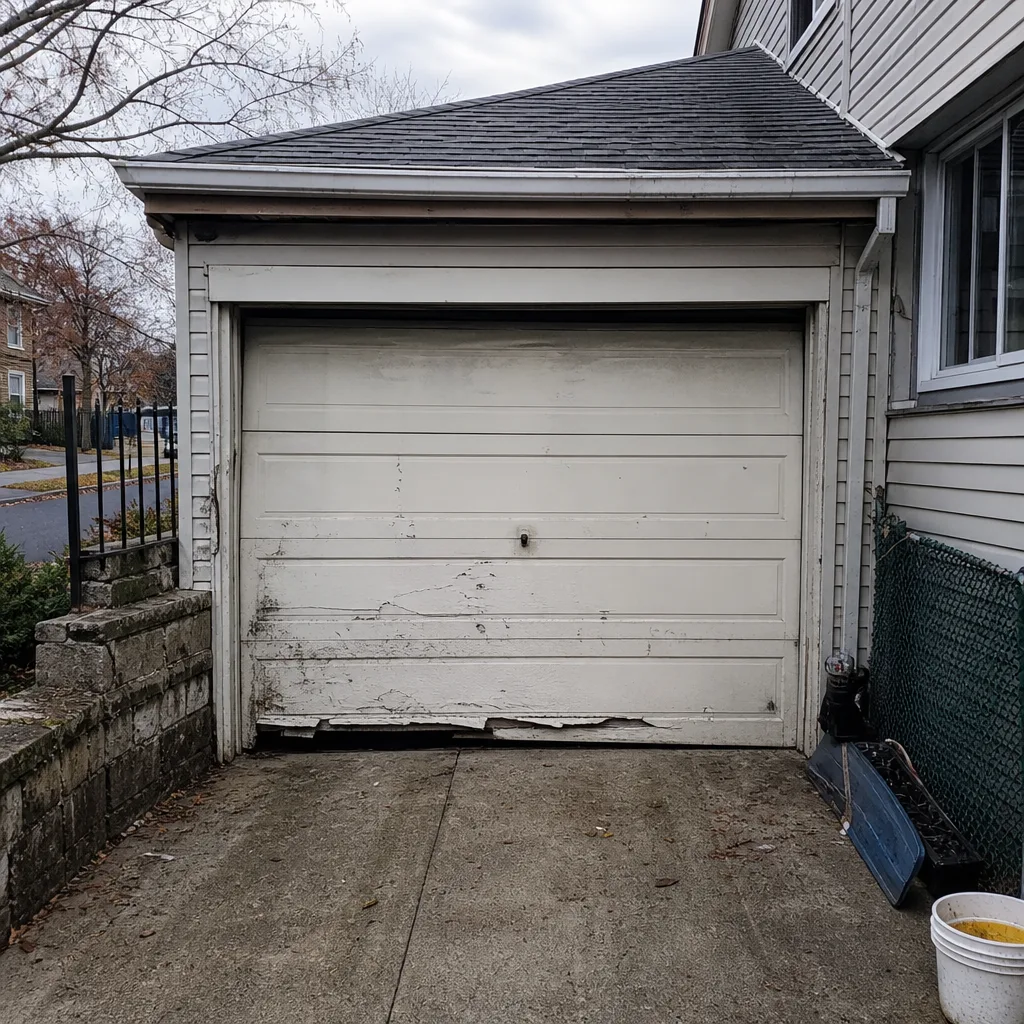 Before
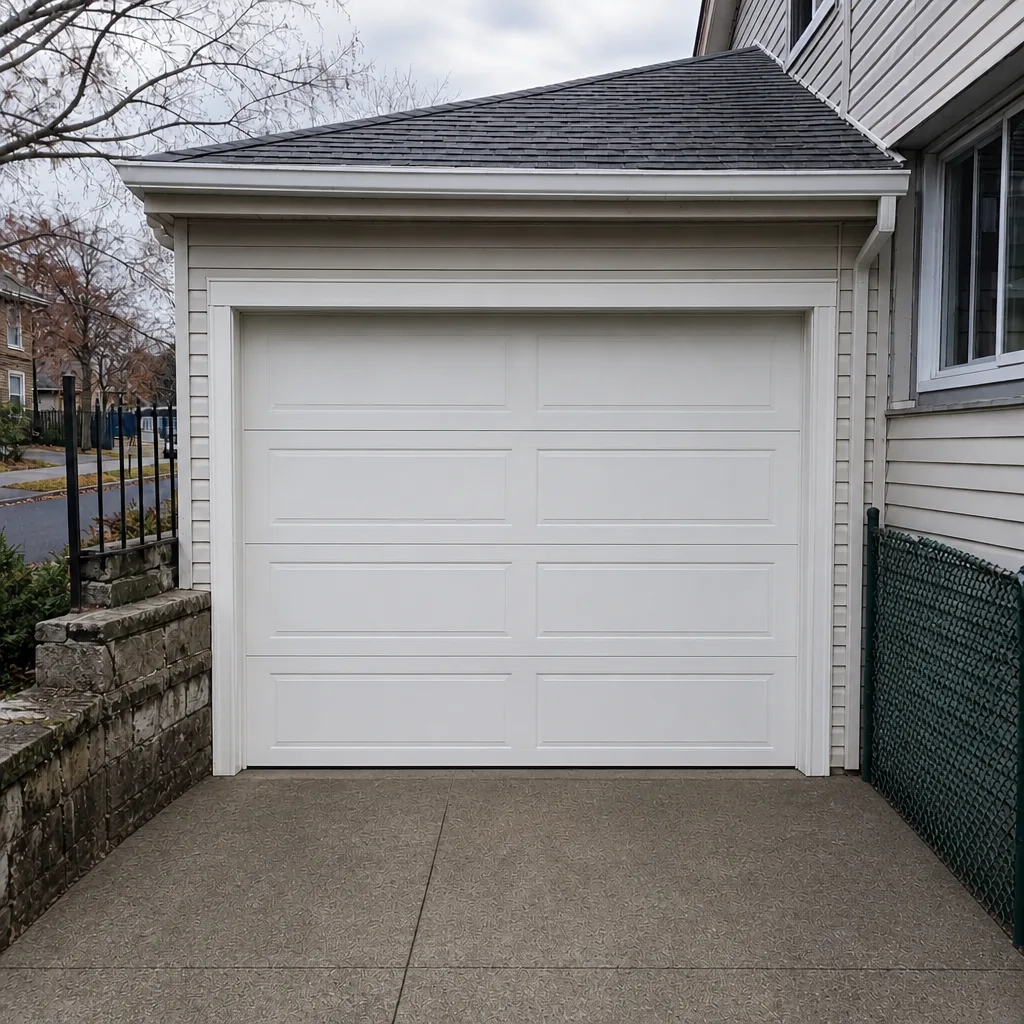 After
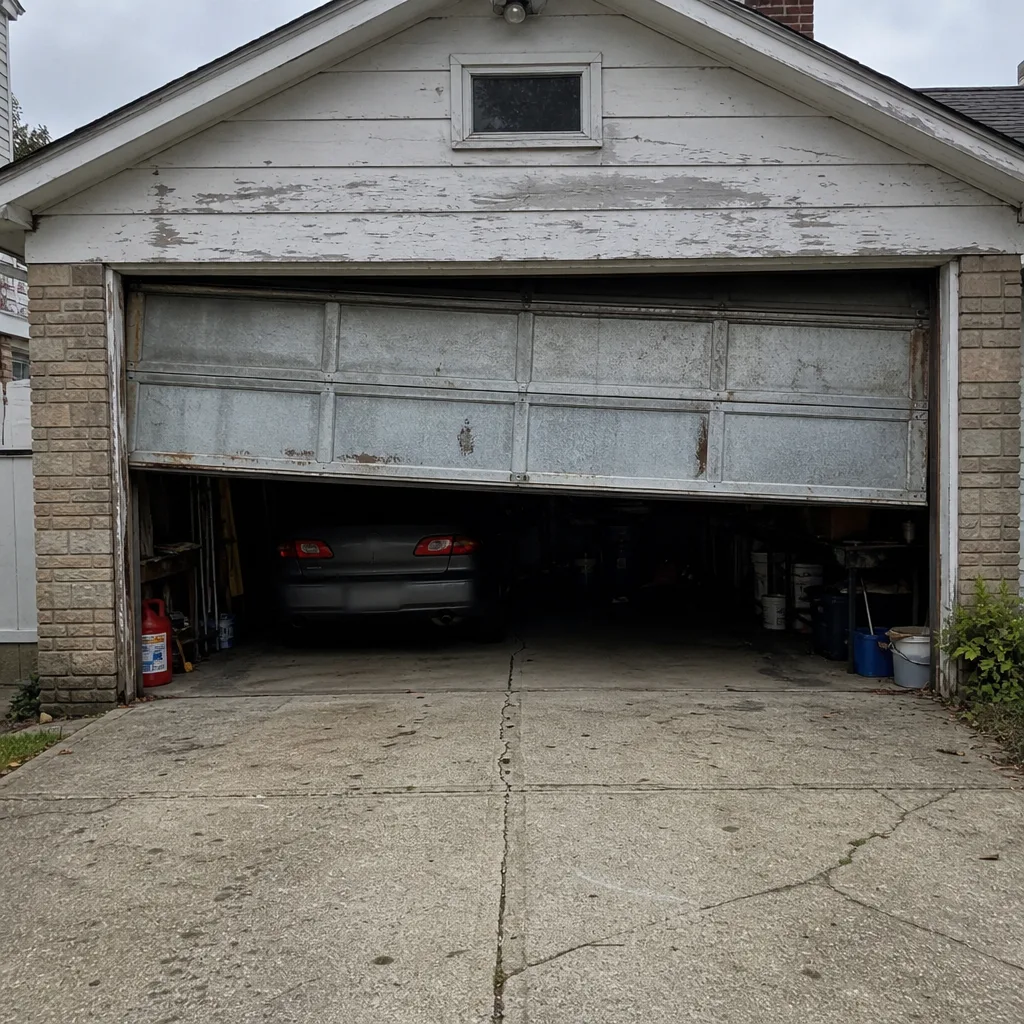 Before
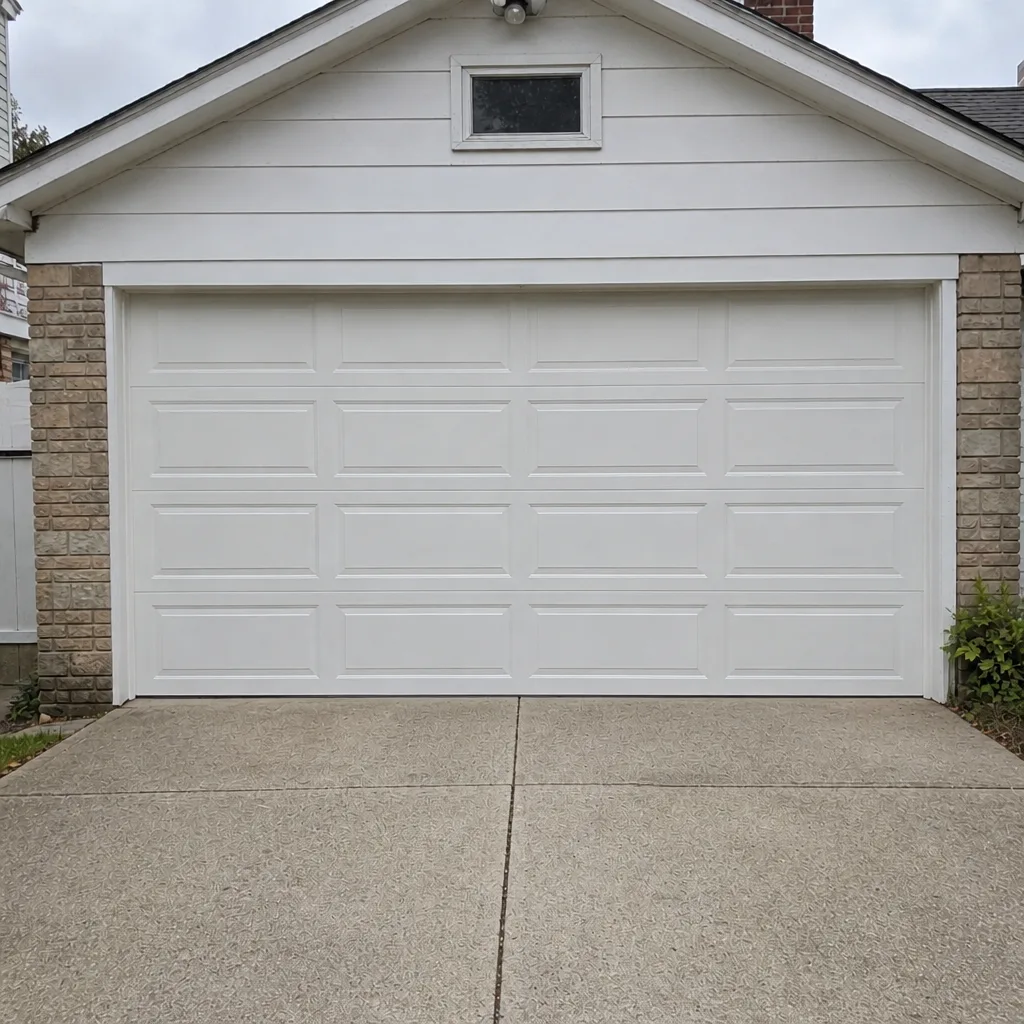 After
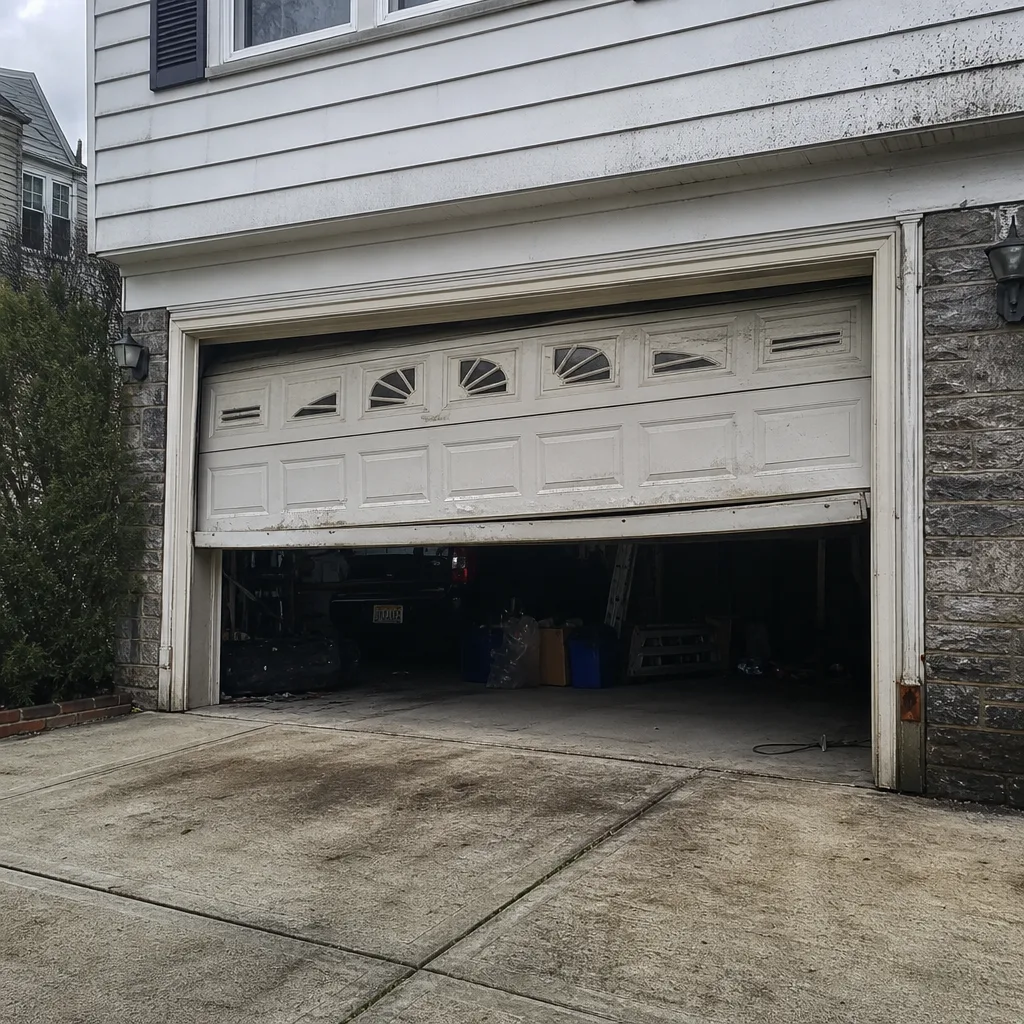 Before
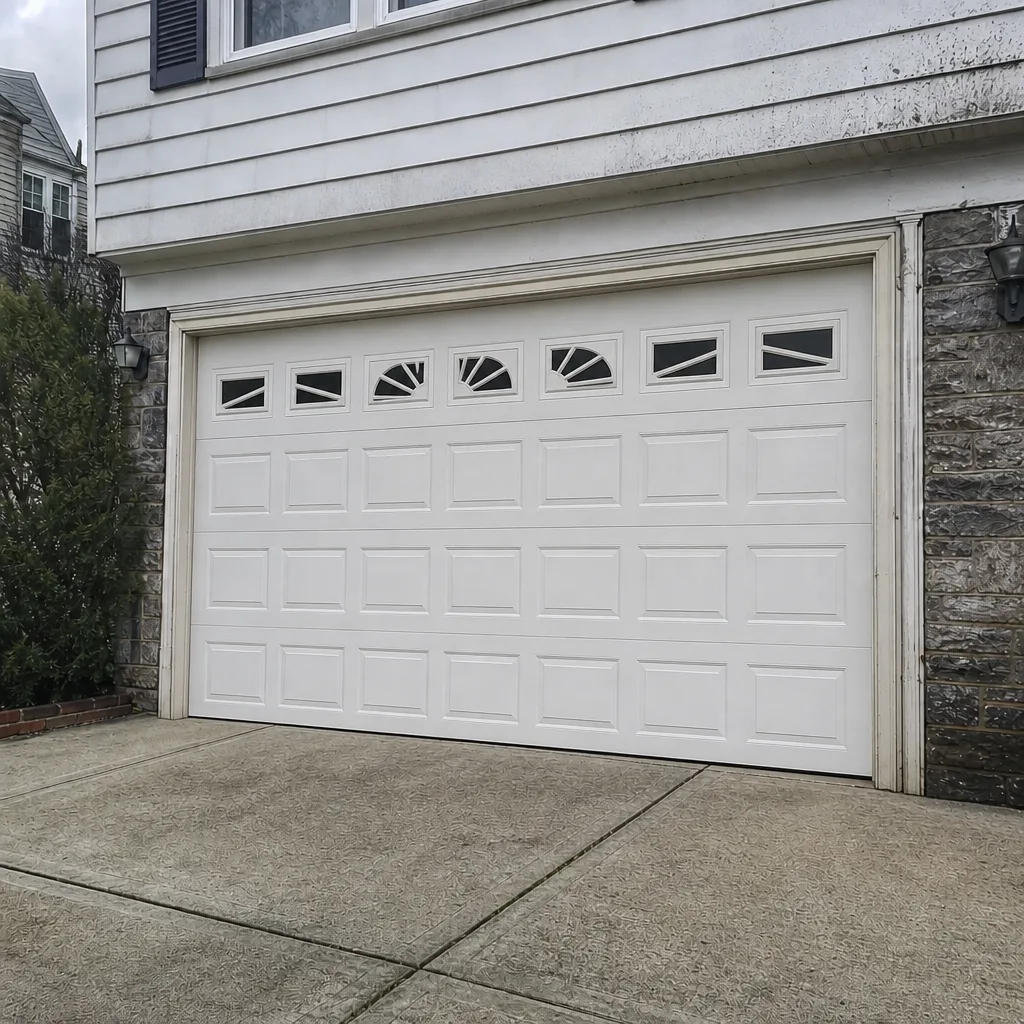 After
When to Call a Professional
Call a professional whenever the problem involves stored energy, structural damage, or the counterbalance system. That means a broken or visibly tired spring, a frayed or kinked cable, a door that has come off one of its tracks, or a door that slams down instead of closing smoothly. It also means any adjustment to the force or travel setting you’re not confident about, and any repair that affects how the door balances. If the door won’t open or close at all, that’s an emergency repair, and we treat it as one.
Our technicians have up to 13 years of experience, and we carry the brand-specific parts that are the most common failure points so you don’t get a return visit for something we could have brought the first time. We work on Clopay, Amarr, LiftMaster, Chamberlain, Genie, Wayne Dalton, Craftsman, and Raynor equipment. If you’ve had a broken spring or a door that won’t close safely and you’re ready to get it looked at, we can help.
Garage Door Repair Kingsbridge offers free estimates in Kingsbridge – call (866) 993-8871. Repairs often get a same-day appointment, emergency service is an offered tier for doors that can’t wait, and you’ll get the price quoted and agreed before any work starts.
Frequently Asked Questions
Spring repair in Kingsbridge typically costs a few hundred dollars per spring, with the exact price depending on the spring type, the door’s weight, and the brand of the door. A matched pair is usually replaced together, so a pair costs roughly twice the single-spring price. Call (866) 993-8871 for a free estimate specific to your door – the written quote is what you pay.
Often, yes. We hold same-day appointment slots for repair calls, and emergency service is available for doors that are stuck open or stuck closed and can’t wait for a standard appointment. Call early in the day and we’ll tell you what’s available. We’re closed on Saturdays, but if your door fails on a Saturday, call and we’ll book you for Sunday.
No. We quote the price before any work begins, and the written estimate is the price you pay. If we find something unexpected during the job, we’ll stop and talk with you before proceeding, so there are no surprises on the invoice.
The local professionals we connect you with are licensed and insured as their state requires. We vet the technicians we work with, and they arrive prepared for the most common brand-specific repairs.
Lubricate before the first hard freeze in late fall, again after the freeze-thaw in early spring, and once more midsummer if the door gets heavy use. That’s a better pattern for Kingsbridge’s seasonal swings than a fixed twice-a-year rule. Lubricate the hinges, rollers, and spring coils, never the tracks.
Yes. Put an object in the door’s path and close it – the door should reverse on contact. Wave something across the floor-mounted sensors and confirm the door won’t close while the beam is blocked. Both tests take two minutes and should be done monthly. If the door fails either test, call for a professional adjustment.
The Bottom Line
The maintenance checklist that works in Kingsbridge isn’t the generic one that tells you to lubricate twice a year and move on. It’s the one built around the parts that actually fail here – springs and cables first, then rollers, hinges, tracks, and seals – and around a lubrication schedule that follows the real seasonal swing from summer heat to winter cold. Test your auto-reverse monthly, don’t touch the springs or cables, keep a written log, and get ahead of the winter with a pre-freeze tune-up. That routine is the difference between a door that lasts and a January breakdown that traps your car when the cold is already dangerous. Our technicians have up to 13 years of experience, and if anything on this checklist turns up a problem, our team at Garage Door Repair Kingsbridge is a phone call away at (866) 993-8871.
Written by the team at Garage Door Repair Kingsbridge.