Last updated November 21, 2026
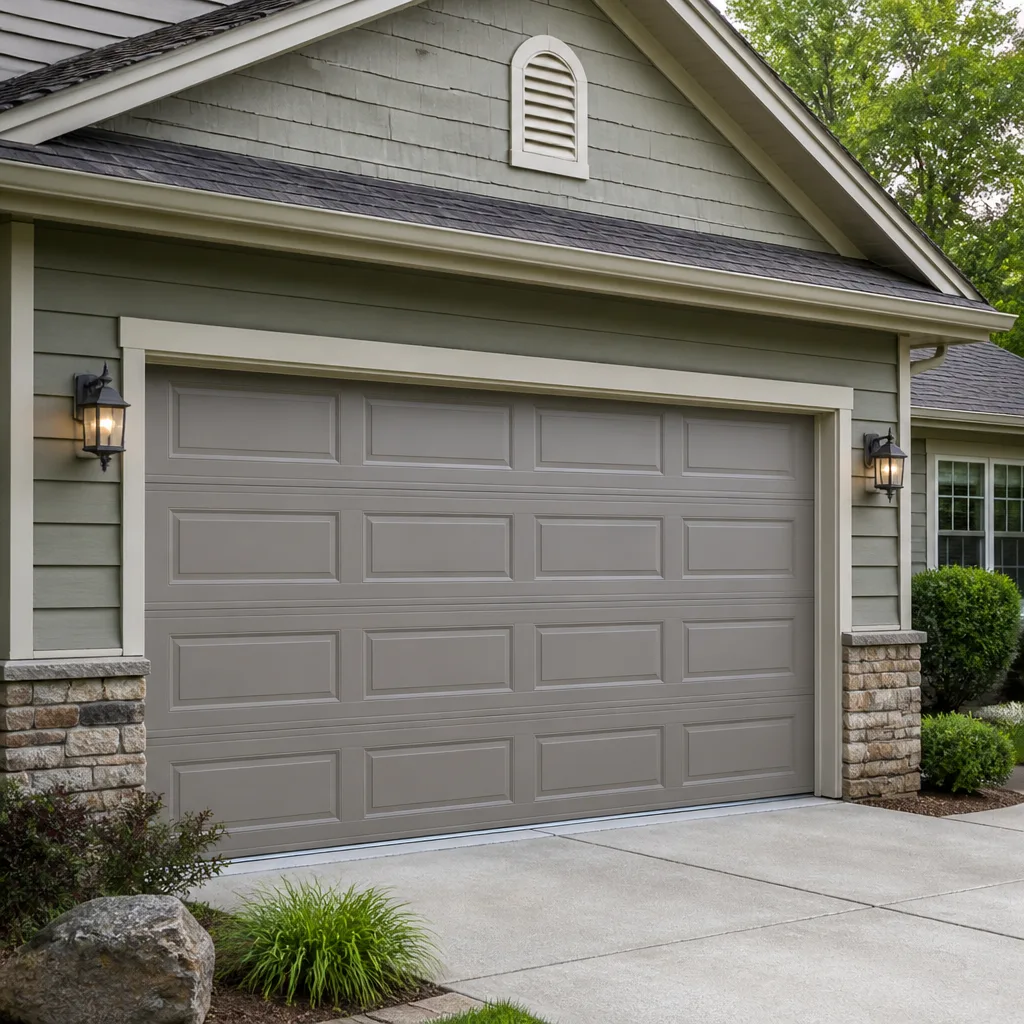 Raised-panel steel
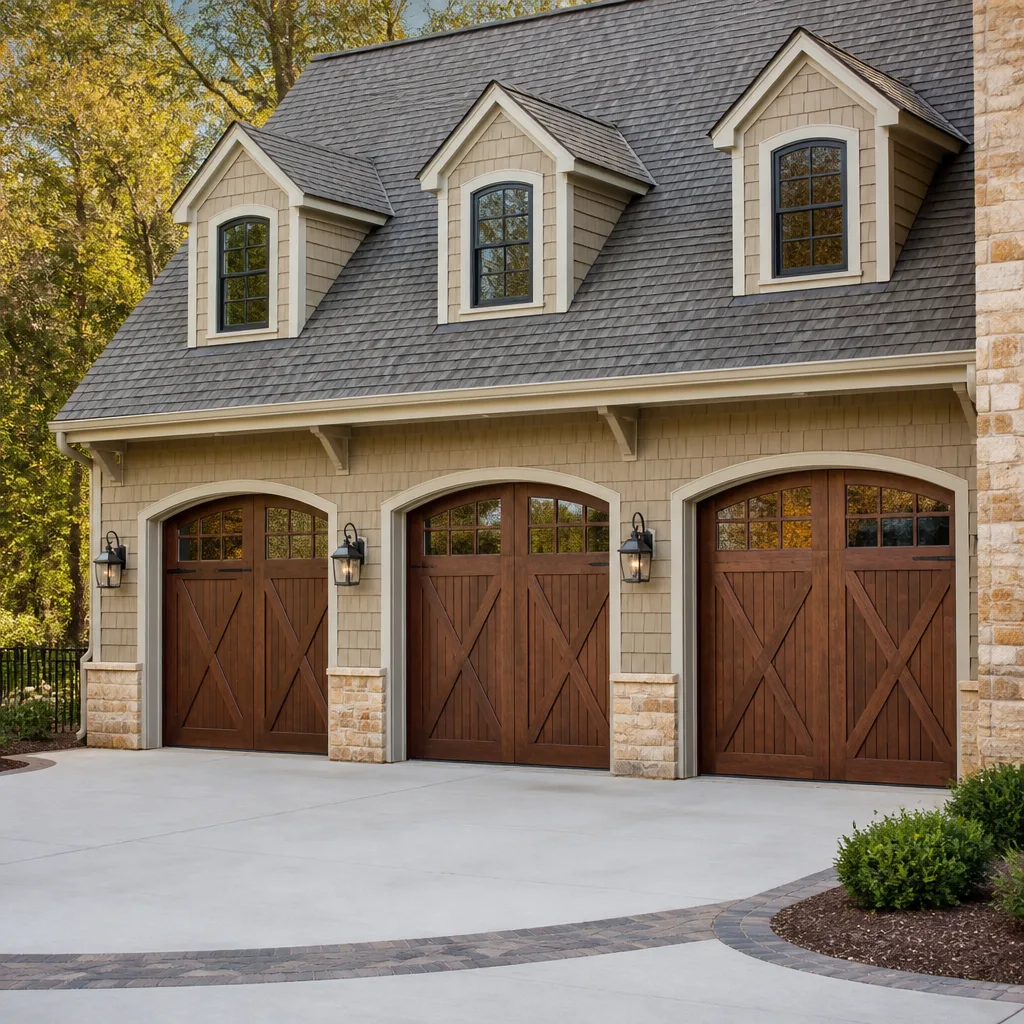 Carriage house
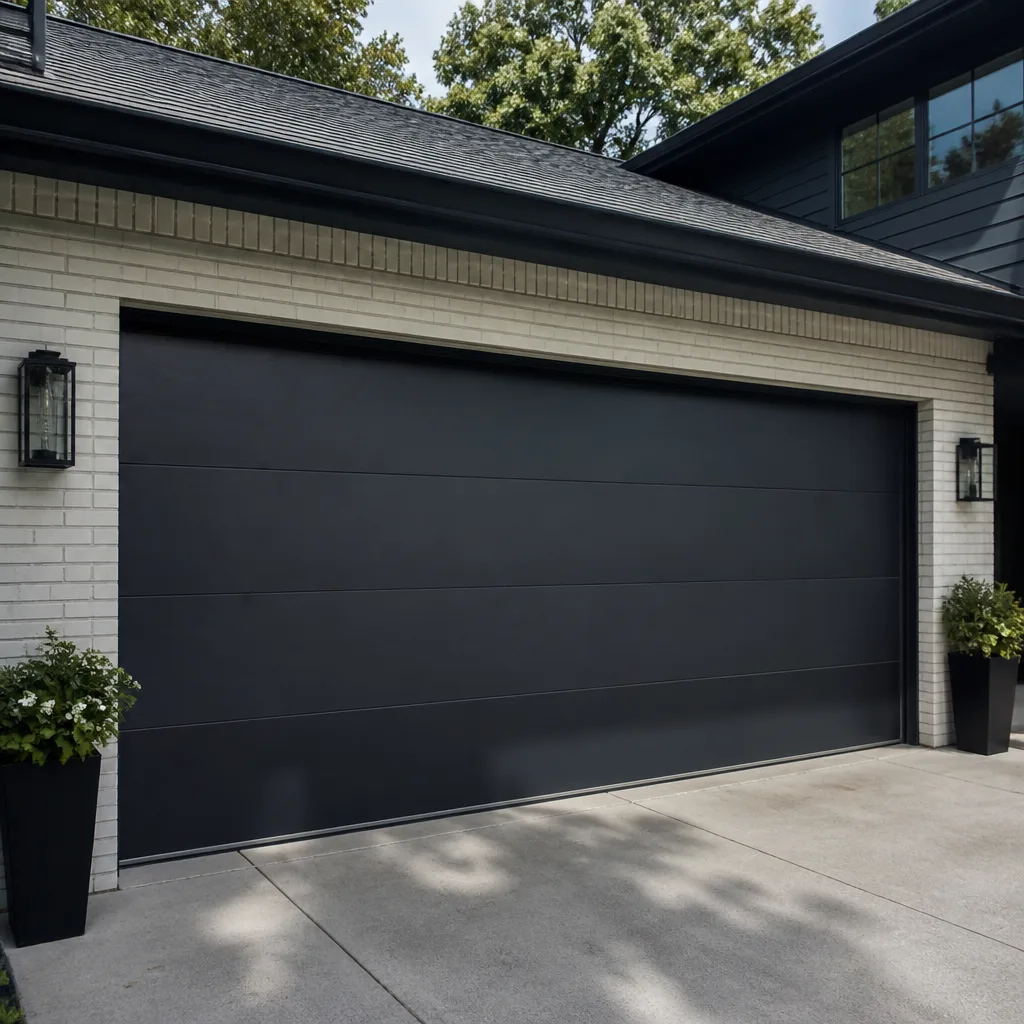 Modern flush
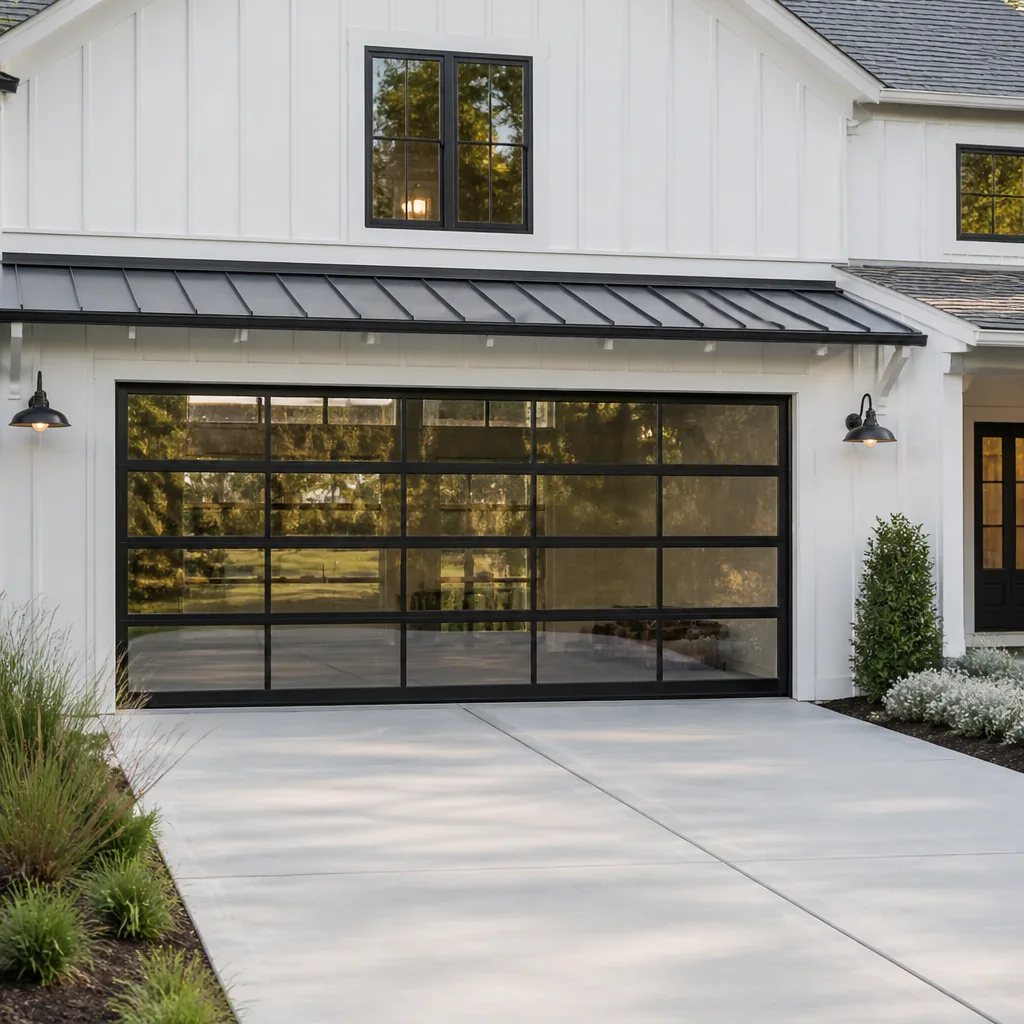 Full-view glass
 LiftMaster openers
 Chamberlain openers
Full 25-point door and opener safety check with every visit - springs, cables, rollers, tracks, and your LiftMaster or Chamberlain opener included
You get a price before we start. It does not change when the pro arrives.
Get your free estimateHow to Hire a Garage Door Contractor in Kingsbridge: A Step-by-Step Guide
Most homeowners in Kingsbridge pick a garage door contractor the same way they pick a plumber in a hurry: they call the first number that comes up and hope for the best. That works out fine about half the time. The other half ends with a door that still sticks, a spring that fails again in a year, or an invoice noticeably higher than the phone quote. Hiring well isn’t complicated, but it takes more than a phone number and a five-minute chat. In a dense borough like the Bronx, where garages share walls with neighbors and buildings sit close together, the stakes are a little higher than in the suburbs. This guide walks through exactly what to check, what to ask, and what to walk away from, so you can hire with confidence in Kingsbridge.
Quick Answer
To hire a garage door contractor in Kingsbridge, verify the company’s New York State home improvement contractor registration and NYC Department of Consumer and Worker Protection license, confirm liability insurance covers at least the state minimum, and insist on a written, itemized quote after an on-site visit. A legitimate specialist will ask about your door’s make, model, and springs before estimating, and will never quote a firm price over the phone without seeing the system. If a company can’t answer those basics, cross it off your list.
Styles & brands we work with
- Raised-panel steel
- Carriage house
- Modern flush
- Full-view glass
- LiftMaster openers
- Chamberlain openers
Table of Contents
- What Licenses and Insurance Should a Garage Door Contractor Have in New York?
- How Do You Verify a Contractor’s License and Insurance in Under Two Minutes?
- Why Insurance Minimums Matter for Attached and Semi-Detached Garages
- How Do You Tell a Garage Door Specialist From a Handyman?
- The Five Questions to Ask Before Accepting Any Quote
- Red Flags Specific to Bronx-Area Contractor Listings
- How to Compare Quotes When Line Items Are Described Differently
- What Kingsbridge’s Climate and Building Stock Mean for Your Door
What Licenses and Insurance Should a Garage Door Contractor Have in New York?
Garage door work in New York carries two layers of regulation, and you should see evidence of both. The first is state-level: New York requires home improvement contractors to register with the Department of State’s Division of Consumer Protection, which issues a Home Improvement Contractor registration number. That number is your starting point, since it confirms the business exists on paper and has filed the required paperwork.
The second layer is local. New York City requires contractors performing home improvement work within the five boroughs, including the Bronx, to hold a Home Improvement Contractor license issued by the NYC Department of Consumer and Worker Protection (DCWP). Kingsbridge sits inside that jurisdiction, so any contractor working on your property here needs that license.
What you should see on a written quote or contract:
- The company’s legal business name, matching what appears in state and city records
- The NYS Home Improvement Contractor registration number
- The NYC DCWP Home Improvement Contractor license number, if the work is inside city limits
- A physical business address, not just a P.O. box or a mobile phone number
- Proof of liability insurance and workers’ compensation coverage
One note on scope: a handyman operating under a general handyman listing may not carry the same registration or the same insurance minimums as a registered home improvement contractor. When you hire someone to tension a torsion spring rated to lift a several-hundred-pound door, that distinction matters more than it does for hanging a shelf. Ask directly which license they hold and whether it’s current. If the answer is vague, move on.
New York State also maintains a searchable database and the DCWP has an online license lookup. Neither takes more than a minute once you know the company’s name. Do the lookup before anyone comes to the door.
How Do You Verify a Contractor’s License and Insurance in Under Two Minutes?
Verification is simpler than most people expect. Here’s the sequence, in order, and it takes about ten clicks:
- Search the NYS Division of Consumer Protection database for the company’s legal name. Confirm the registration status shows as active and the number matches what appears on your quote.
- Search the NYC DCWP license lookup using the contractor’s license number. DCWP publishes license status, so a lapsed or revoked license will show up.
- Ask for a certificate of insurance naming the general contractor or building owner as additional insured. The certificate should come directly from the insurer, not from the contractor’s own printer.
- Ask whether the company carries workers’ compensation. If they don’t, and someone gets hurt on your property, the claim can come back to you.
- Cross-check the business address against Google Maps or the NYC property records. A real address should show up somewhere.
We recommend doing this before scheduling a site visit, not after. A contractor who is real and licensed will happily give you the numbers up front. A company that hesitates, changes the subject, or says the license is “in the truck” is giving you the answer you need without the two minutes.
For property owners in Kingsbridge, where many garages are attached to older multi-family buildings, insurance verification isn’t a formality. If a contractor is uninsured and damages a shared wall or the neighboring unit’s property, you’re the one dealing with the claim. A five-minute check protects the whole building, not just your door.
Why Insurance Minimums Matter for Attached and Semi-Detached Garages
In suburban settings, a garage door repair gone wrong damages one house. In Kingsbridge, where many homes are attached, semi-detached, or sharing a party wall with a neighboring building, a dropped door or a failed spring can send a panel through a shared wall, crack masonry that both sides own, or knock debris onto the adjacent property. The cost of that damage lands on whoever is holding the liability policy.
New York requires home improvement contractors to maintain general liability insurance as a condition of registration. The specific minimum is set by the Department of State, and the exact figure can change, so the practical move is to ask two questions: what’s your general liability limit, and can you send the certificate from your insurer. Any limit below the state minimum is a non-starter. A contractor carrying only the bare minimum is still technically compliant, but for a job affecting shared structure, you’ll want someone whose coverage reflects the work.
| Coverage type | Why it matters for Kingsbridge garages |
|---|---|
| General liability | Covers property damage if a door or component strikes a shared wall, adjacent building, or nearby parked vehicle |
| Workers’ compensation | Protects you if a technician is injured on your property |
| Commercial auto | Less critical, but confirms the business is operating professionally |
The practical takeaway: ask for the certificate of insurance regardless of what kind of garage you have. If it’s attached or semi-detached, ask whether the policy limit is comfortably above the state minimum. A contractor who can produce documentation in a few hours is a contractor who’s been asked before.
How Do You Tell a Garage Door Specialist From a Handyman?
A garage door is a mechanical system with its own vocabulary: torsion springs, extension springs, drums, cables, hinges, rollers, tracks, sensors, photo-eye alignment, opener logic boards. A general handyman can tighten a hinge and reattach a roller, but a technician who knows what to do when a spring snaps on a Clopay door with a specific weight rating needs brand-specific training and the right parts. Those are different skill sets, and the test isn’t insulting to handymen; it’s just accurate.
How to spot the difference in about five minutes:
- Ask what brands they service. A specialist names specific manufacturers, like Clopay, Amarr, Wayne Dalton, or Genie, and can talk through the differences between them. A handyman says “all of them” without specifics.
- Ask about spring types. A specialist distinguishes torsion from extension springs and knows they need different tools and safety procedures. A handyman will talk about springs generically.
- Ask whether they carry parts. A company organized around garage doors stocks or can source brand-specific springs, rollers, and openers without a second visit. A handyman orders and returns.
- Ask about openers as a separate specialty. Opener repair isn’t the same as door repair. A specialist should have a defined garage door opener repair offering that covers legacy chain drives and modern smart openers.
- Ask about installation. If they can’t handle a full door replacement, they’re running a repair-only operation. That’s fine as long as you don’t need garage door installation later.
At Garage Door Repair Kingsbridge, our technicians work on doors and openers from LiftMaster, Chamberlain, Genie, Clopay, Amarr, Wayne Dalton, Craftsman, and Raynor, so a replacement part for one of those brands doesn’t usually turn into a second appointment. That’s what “specialist” should mean: you don’t have to call someone else when the job turns out to be a different brand than expected.
The Five Questions to Ask Before Accepting Any Quote
These questions work for any garage door quote, whether it’s for a garage door repair in Kingsbridge or a full replacement. Ask each one in order and note the answer:
- “Can I see the quote in writing, itemized by part and labor?” A lump-sum number hides what you’re paying for. An itemized quote tells you whether the spring is priced fairly, whether the labor makes sense, and whether anything’s been added on spec.
- “Do you stock the parts, or will you order them?” If the company stocks the spring or opener logic board, the job is one visit. If they order, it’s two, and the second visit may drift on the calendar.
- “What’s your license number, and can you send me the certificate of insurance?” Any contractor who can’t answer this is telling you they’re not registered or not insured. Both are disqualifying.
- “Do you have a dedicated emergency call line if my door fails at a bad time?” A company organized around emergency work will describe how that works. A company that treats emergency calls as an after-hours callback sometimes doesn’t have one at all.
- “Is this the price, or will it change once you start?” A legitimate contractor quotes after a site visit and stands behind the number. If the answer involves the word “probably,” ask for a written fixed quote before work begins.
We’ve found that question five is the most revealing. Garage doors are systems, and a technician who’s seen the door, listened to it open, and checked the balance with a manual test can quote with real confidence. A phone estimate is a guess; a written in-person quote is a commitment. On any quote you should ask directly: “Is this the price I’ll pay if nothing unexpected is found, and what happens if something unexpected is found?” The answer should be a fixed number, with a written process for anything that comes up mid-job.
Red Flags Specific to Bronx-Area Contractor Listings
In a dense borough with a lot of small contractors, the listings themselves give you information. Here are the patterns worth pausing on:
- No physical address anywhere. A business with a real address has a place registered with the state and the city. A listing with only a phone number and a vague “serving the Bronx” tagline is worth a second look at the state database.
- Only a mobile number, no landline or business line. Not disqualifying on its own, but if the license lookup doesn’t come back with anything, that number isn’t worth calling.
- Quotes given over the phone without a site visit. Garage door pricing depends on spring type, door weight, track condition, and the age of the opener. Anyone willing to give a firm number sight unseen is either guessing or planning to revise it once they see the job.
- “We’ll figure it out when we get there.” Fair enough as a starting stance, but if that’s the answer to “what’s the total,” walk away. You want the number before, not after.
- Reviews that are all brand-new accounts and one-line praise. Look for detailed reviews that name specific problems, parts, or brands. Generic five-star reviews with no text don’t tell you much.
- A price far below every other quote. Garage door springs and openers cost roughly the same to buy across brands, so a quote that’s dramatically lower usually means a cheaper part or an assumed add-on later.
- Pressure to sign before the tech leaves. A legitimate contractor is comfortable with you taking the quote and calling back in a day. Anyone who needs the answer right now is selling, not quoting.
One Kingsbridge-specific note: a lot of contractors work out of the Bronx and cover multiple boroughs, so it’s normal to see a company address outside Kingsbridge itself. What matters is the license and insurance, not the garage their own trucks park in. Just confirm the registration covers work in New York City, and that the certificate of insurance lists the work address correctly.
How to Compare Quotes When Line Items Are Described Differently
Comparing two garage door quotes is one of the more frustrating parts of hiring, because contractors describe the same work in different words. One quote says “torsion spring replacement,” another says “spring assembly,” a third says “spring and hardware.” Before comparing dollar figures, normalize the line items:
- Ask each contractor to break their quote into four buckets: parts, labor, disposal or haul-away, and diagnostic/visit fee. Ask for the totals in writing.
- Confirm spring counts. A torsion-spring replacement may be priced for one spring or a matched pair. If one quote is for a pair and another for a single, they’re not comparable. Ask explicitly.
- Confirm opener model and compatibility. If a quote includes a new opener, ask which model and whether it’s compatible with the door’s weight and track.
- Ask whether the quote includes hauling away the old door or parts. Haul-away is a real line item on replacements and sometimes on repairs.
- Ask about warranties in writing. The difference between a labor warranty and a parts warranty is real. Get the specific duration in the quote, not as a spoken promise.
- Normalize the “callout” or diagnostic fee. Some companies fold the diagnostic into the job; others charge separately. If both are quoted, subtract the fee from the total to compare apples to apples.
On any quote, the final number is the price. That’s the anchor we work from: quoted before work begins, written down, and honored. If a contractor can’t explain their numbers in these five buckets, ask for a revision before you sign anything.
What Kingsbridge’s Climate and Building Stock Mean for Your Door
Kingsbridge sits in a part of the Bronx where winters bring freeze-thaw cycles and summers bring humidity, and both take a toll on garage door systems. Cold snaps stiffen torsion springs and make them likelier to fail. Summer heat softens weatherstripping, which lets in rainwater and pests. The result, in our experience, is that door failures cluster around the temperature shifts: the first serious cold snap and the first hot week are when spring and opener calls pick up.
The building stock matters too. Many Kingsbridge garages are older, and some are attached to multi-family buildings with a common wall. Older doors may be heavier than modern equivalents, which puts more strain on the springs and opener. Overhead tracks in older garages are sometimes slightly out of plumb from decades of settling, and that puts uneven wear on rollers and hinges. None of this means the door is failing, but it’s the context a good technician checks on a site visit: door balance, spring type and weight rating, track alignment, and photo-eye behavior.
If you’re going through this guide because your door is currently broken, that climate context points you toward a specific check: if the door won’t lift, or lifts a few inches and stops, the springs are the likely culprit and the door is dangerous to operate. If the door opens but won’t close, the opener’s sensors or logic board are the usual place to look. In either case, an emergency call beats a DIY fix, because a torsion spring under tension is genuinely dangerous to handle without training, the correct winding bars, and a clear plan.
Common Mistakes to Avoid
- Accepting a phone quote as the final price. Garage door pricing depends on the specific door, spring, and opener, and a phone number is a guess. Insist on a written quote after a site visit.
- Skipping the license lookup. New York State registration and the NYC DCWP license are both checkable online in minutes. Not checking leaves you exposed if the work goes wrong.
- Not asking about insurance. In a dense borough like the Bronx, damage to a neighbor’s property or a shared wall is a real risk. Ask for the certificate of insurance before anyone starts work.
- Assuming a handyman is a specialist. Ask which garage door brands the company services. If the answer is a vague “all of them,” it usually means none of them specifically.
- Choosing on price alone. A quote that’s far below the others usually means cheaper parts or an add-on later. Compare itemized quotes, not totals.
- Trying to replace a torsion spring yourself. A torsion spring is under heavy tension even at rest, and a wrong move can cause serious injury. This is the one job where hiring out is the right call, always.
- Ignoring the opener as a separate system. The door and the opener are different machines. A company that handles both, from legacy chain drives to modern smart openers, saves you a second call when the problem turns out to be the opener rather than the door.
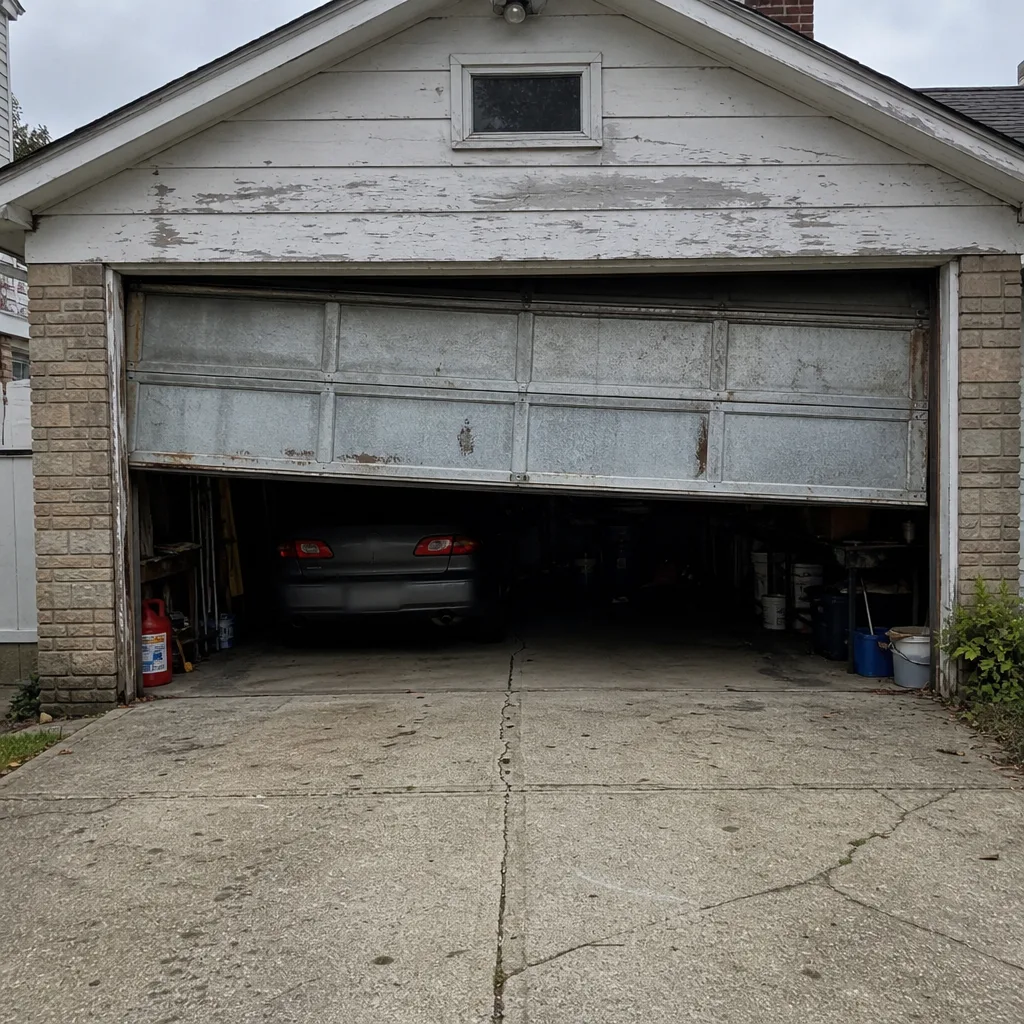
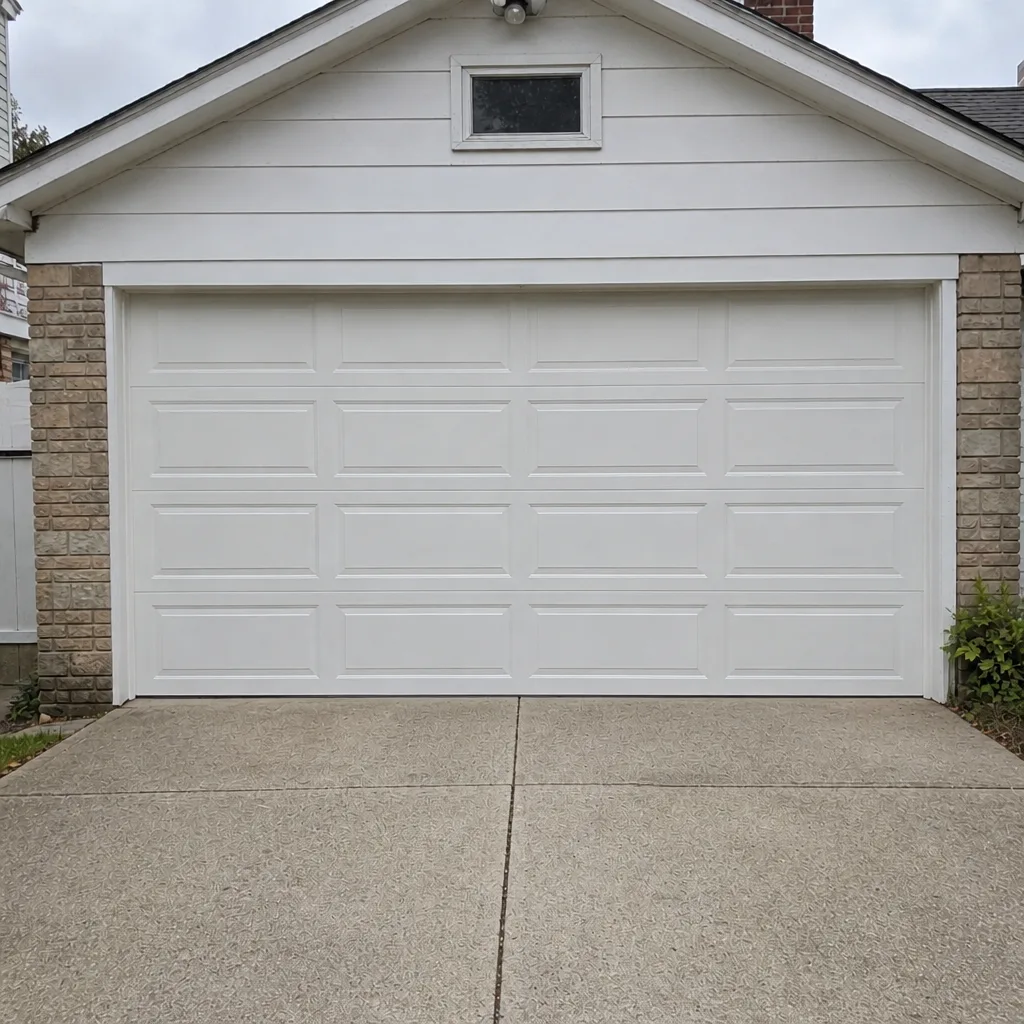
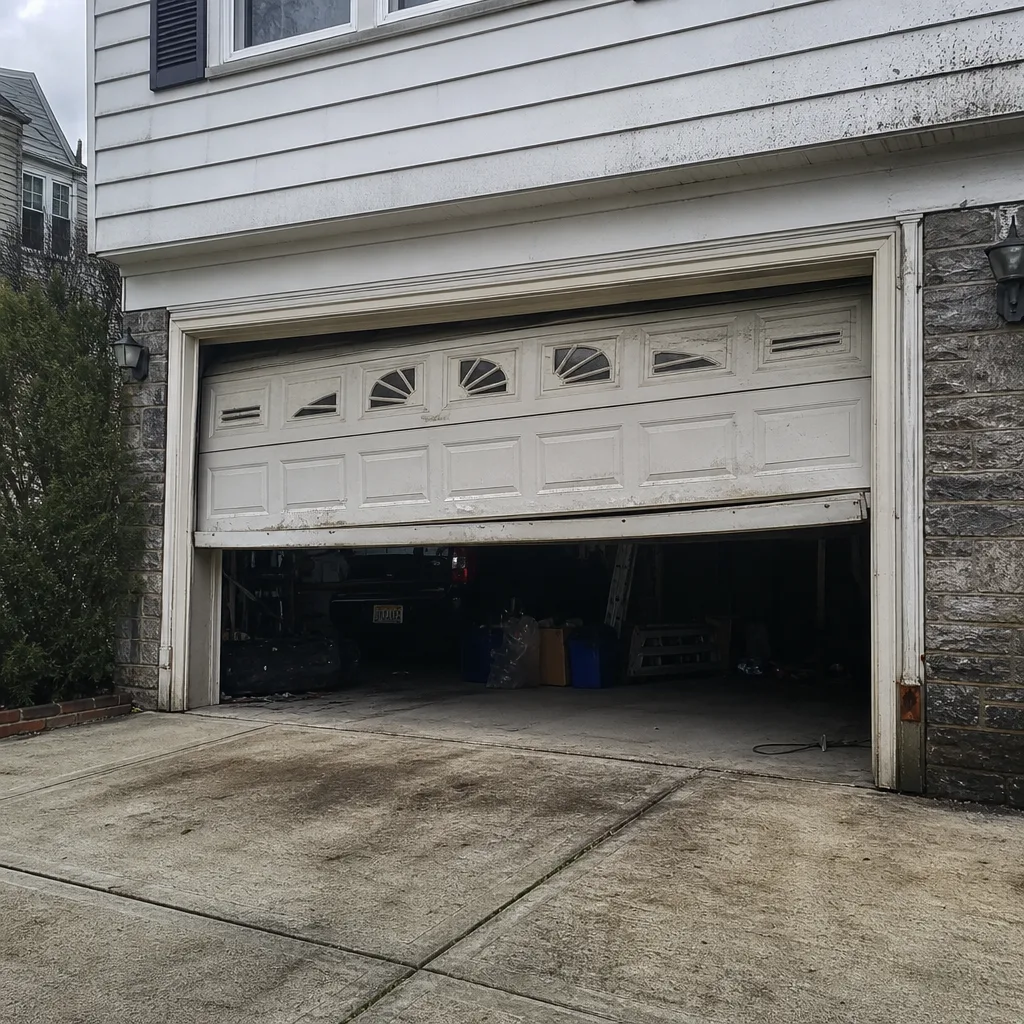
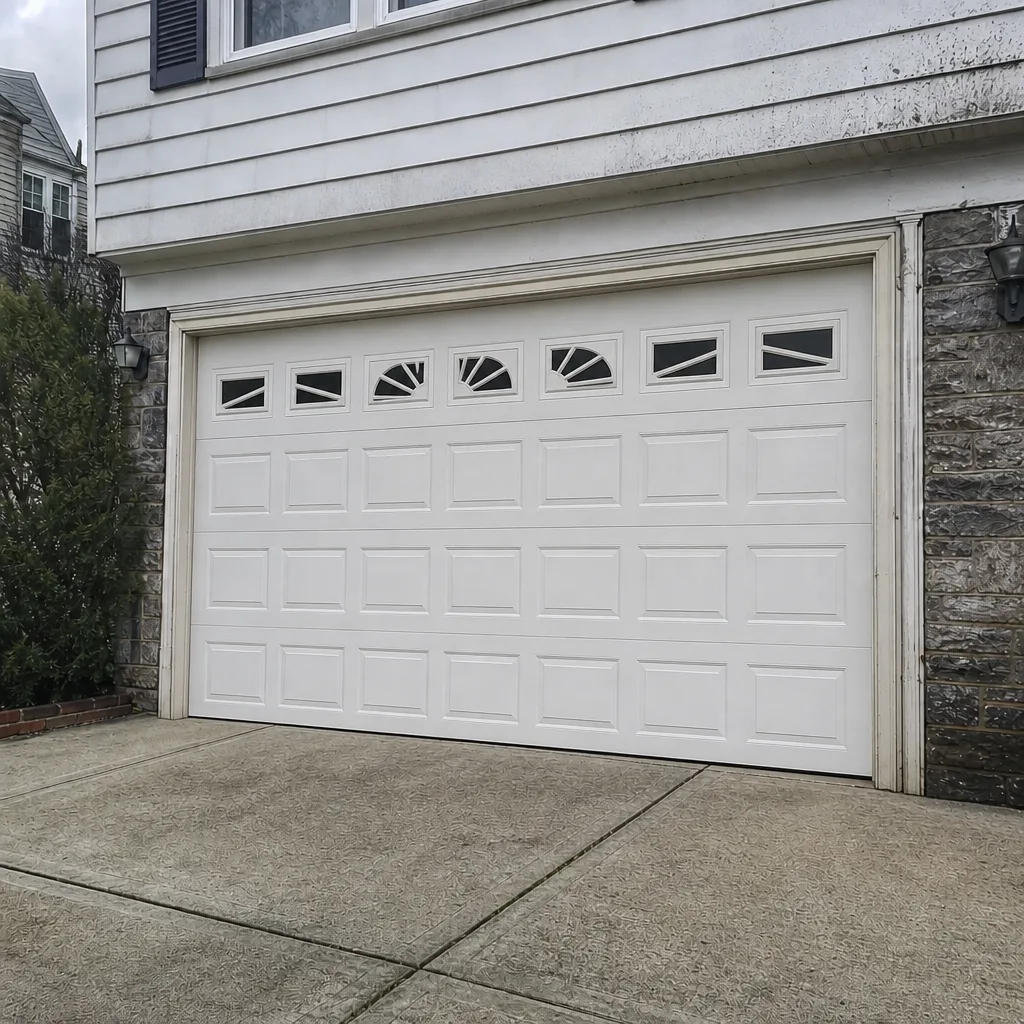
See the difference
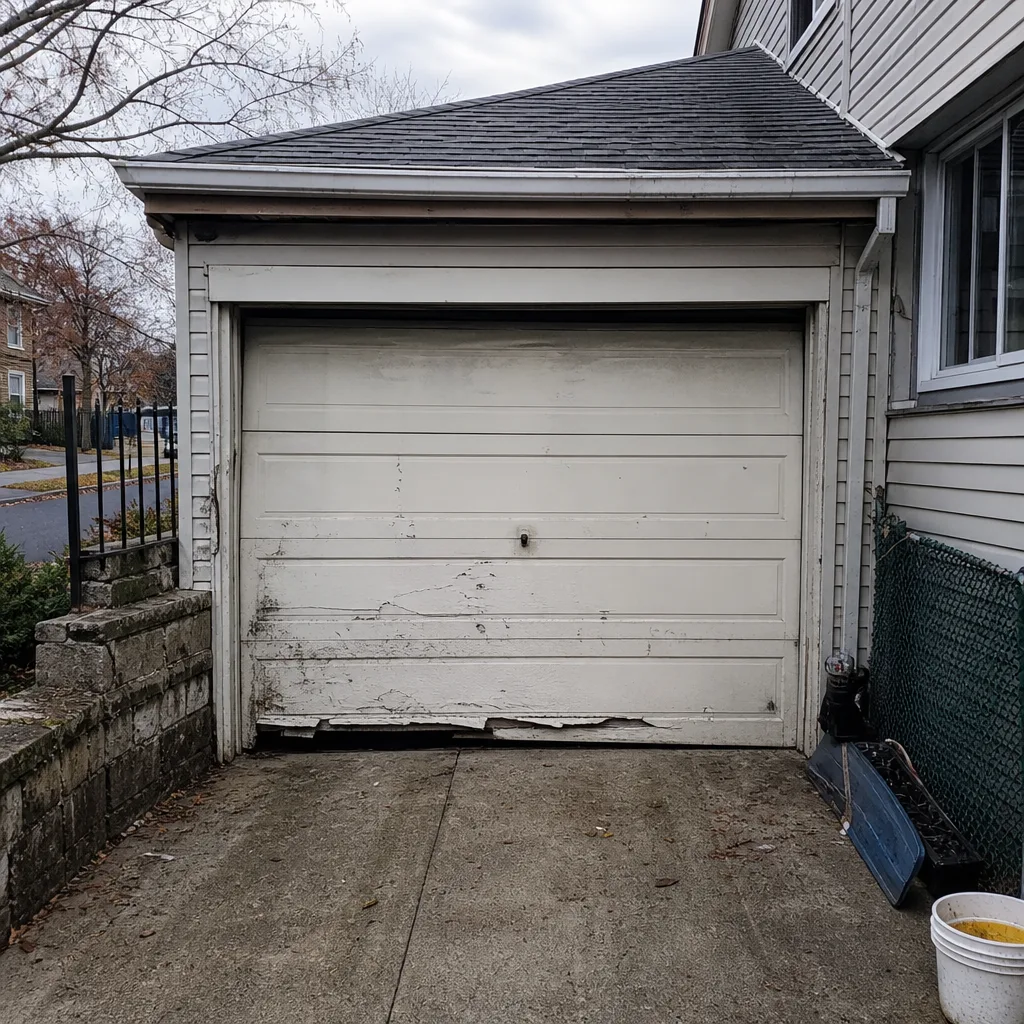 Before
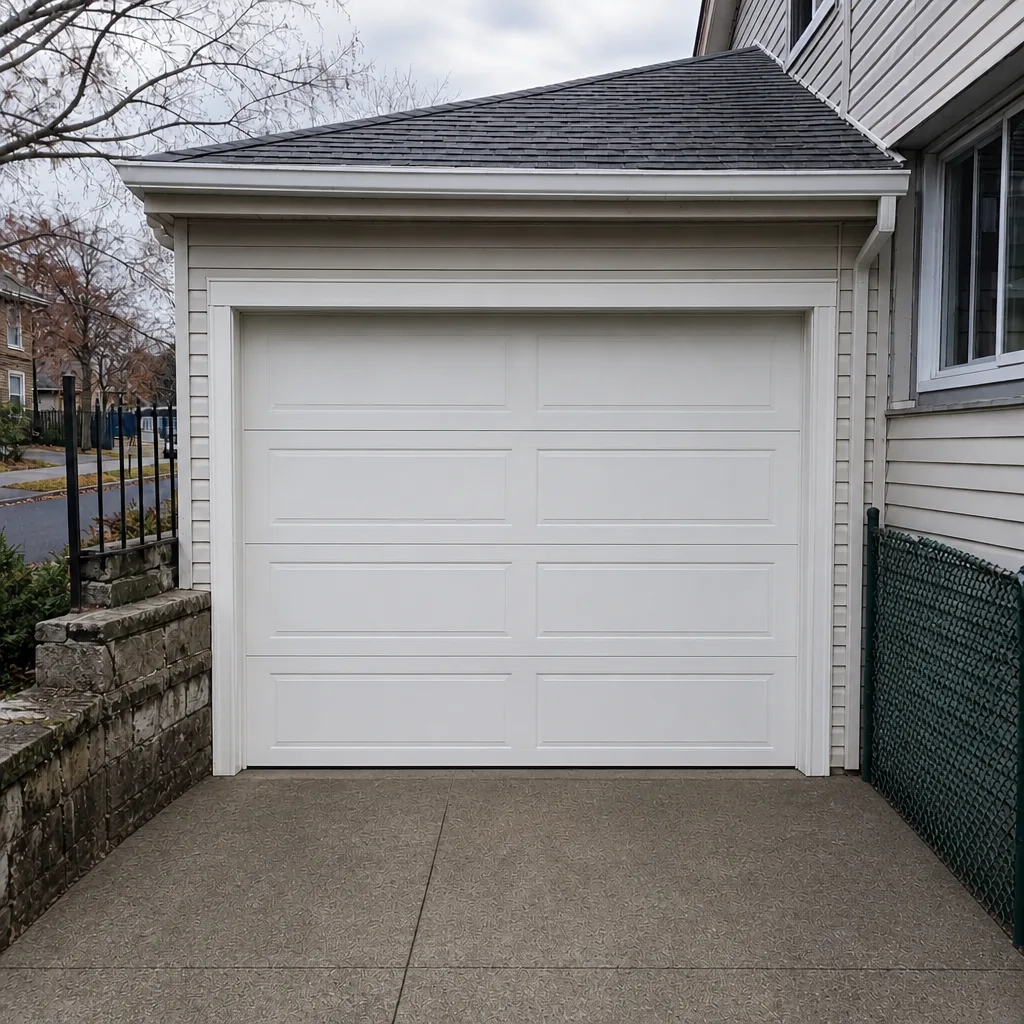 After
 Before
 After
 Before
 After
When to Call a Professional
Some garage door problems are cosmetic and can wait. Others shouldn’t. Call a professional if the door won’t open or close, if it lifts a few inches and stops, if a spring has visibly snapped, if the door is sagging or unreeling cables, or if the opener runs but the door doesn’t move. Also call if you see cracked hinges, bent tracks, or a door that closes unevenly. These are all signs of a mechanical problem that will get worse, and a few of them, particularly spring failure, are dangerous to try at home. If the door is stuck open or stuck closed and you can’t secure the house, an emergency call is the right move. Garage Door Repair Kingsbridge offers free estimates in Kingsbridge; call (866) 993-8871 and we’ll help you decide whether your door needs a repair, an opener fix, or a replacement.
Frequently Asked Questions
Yes. Work in the Bronx requires the contractor to be registered with the NYS Department of State as a home improvement contractor and licensed by the NYC Department of Consumer and Worker Protection. Ask for both numbers before any work begins, and verify them online; it takes about two minutes.
Ask the contractor for a certificate of insurance sent directly from their insurer, not a photocopy. Confirm the policy is current, that general liability is above the state minimum, and that workers’ compensation is listed. If the company can’t produce it, don’t hire them.
Because damage from a failed repair can affect a shared wall or adjacent property, and the cost of that damage lands on whoever is covered. In Kingsbridge, where many garages share structure with neighboring buildings, insurance is less about the door and more about the whole property.
Some handymen do minor adjustments, but larger repairs, especially spring and opener work, need a licensed home improvement contractor because of the registration, insurance, and safety requirements involved. When the job involves a torsion spring or electrical work on the opener, hire a specialist.
A phone quote is an estimate based on what you describe; a written quote follows a site visit and is the price you’ll pay for that job. Garage door pricing depends on spring type, door weight, track condition, and opener health, none of which you can fully see over the phone. Always get the written version.
For urgent repair calls, including stuck doors and failed springs, yes: same-day and emergency appointments are part of how we operate. For a full door replacement or new installation, that’s scheduled work, and the first step is a free measure and a written price. Call (866) 993-8871 for an exact quote, and estimates are free.
The Bottom Line
Hiring a garage door contractor in Kingsbridge comes down to four checks: verify the license, confirm the insurance, ask whether they’re a specialist or a handyman, and insist on a written quote after a site visit. Do those four things and you’ll avoid most of the outcomes this guide warns about. Everything else, from comparing line items to understanding what climate does to springs, is context for the main decision. If you want a second opinion on a quote you’ve already received, or you need help diagnosing a door that’s acting up, call us and we’ll walk through it with you, whether you hire us or not.
Our technicians have up to 13 years of experience working on doors and openers from major brands, and we treat spring repair as the safety-critical job it is. When you’re ready to schedule a free estimate in Kingsbridge, call (866) 993-8871, and we’ll review the door, quote in writing, and tell you honestly whether it’s a repair or a replacement. For a full picture of what we handle, start with Garage Door Repair Kingsbridge.
Written by the team at Garage Door Repair Kingsbridge.